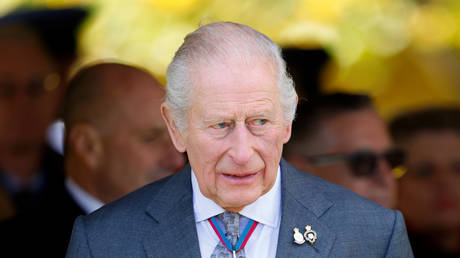
King Charles III used his 2024 Easter message to emphasize the importance of "care and friendship," a move widely interpreted as an attempt to steady the royal ship following intense public scrutiny over his earlier acknowledgment of Ramadan. This isn't just about a religious calendar. It is a calculated exercise in modern monarchy survival. By doubling down on universal values during the Christian holy week, the King attempted to reconcile his constitutional role as Defender of the Faith with his personal ambition to be a protector of all faiths in a multi-cultural Britain.
The tension began when the King’s initial silence on certain traditional markers was contrasted with a warm, proactive message to the Muslim community. To the casual observer, it was a polite gesture. To the traditionalist base that provides the bedrock of monarchist support, it felt like a pivot away from the Church of England. This friction reveals the precarious tightrope the modern British Sovereign must walk.
The Constitutional Conflict of a Multi Faith King
Britain remains a country with an established church. The King is its Supreme Governor. This isn't a mere suggestion or a historical footnote; it is a legal requirement of the office. When the Palace released a message celebrating the start of Ramadan while the Easter preparations seemed comparatively muted in the early news cycle, it triggered a predictable but potent backlash. Critics argued that the King was neglecting his primary spiritual duty in favor of a progressive, pluralistic agenda.
However, the reality is more complex than a simple binary between "traditional" and "woke." Charles has spent decades signaling that he views his role through a broader lens. He famously suggested years ago that he would prefer the title "Defender of Faith" rather than "The Faith." This subtle grammatical shift represents a massive theological leap. He sees the Crown as a canopy under which all religions can find shelter. The problem arises when the canopy appears to be shifting its structural supports.
The Easter message was the correction. It arrived at a time when the King was largely withdrawn from public life due to his cancer diagnosis, making the recorded audio message even more significant. It wasn't just a holiday greeting; it was a proof of life and a proof of loyalty to the Anglican tradition. He spoke of the "heart of the King" and the "example of Christ," specifically leaning into the Christian narrative to quiet the voices claiming he had abandoned the pews for the sake of optics.
Behind the Palace Communications Strategy
Royal messaging is never accidental. Every word is vetted, every timing is measured, and every silence is deliberate. The backlash over the Ramadan greeting caught the Palace communications team in a rare moment of vulnerability. In their haste to appear inclusive and modern—traits Charles has always championed—they underestimated the depth of feeling among those who view the Monarchy as the last bastion of traditional British identity.
The subsequent Easter address was a masterclass in rhetorical recovery. By focusing on the concept of service, the King bypassed the sectarian debate. He didn't apologize for the Ramadan message; he simply recontextualized it as part of a broader commitment to "care and friendship." This is the classic "Both/And" strategy. The Crown intends to be both the head of the Church of England and the ultimate diplomat for a diverse population.
It is a difficult sell. The United Kingdom is becoming increasingly secular, yet the Monarchy’s legitimacy is still fundamentally tied to the Divine Right and the religious coronation oath. If the King becomes just another secular head of state who sends out generic "Happy Holidays" style messages to every group, he risks losing the "mystique" that Walter Bagehot famously argued was essential to the Monarchy’s survival. If he leans too hard into Anglicanism, he alienates the millions of British citizens who do not share that faith.
The Weight of History and the Modern Pews
To understand the "why" behind this controversy, one has to look at the demographics of the United Kingdom. Attendance at Church of England services has been in a steady decline for decades. Meanwhile, vibrant religious communities—Muslim, Hindu, Sikh, and others—are growing in both number and civic influence. The King knows the math. He understands that for the Monarchy to remain relevant in the 21st century, it cannot be the exclusive property of one shrinking demographic.
Yet, the "Defender of the Faith" title is not just a badge. It carries expectations of exclusivity from the very people who stand outside in the rain to wave flags. When those people feel their traditions are being sidelined or "balanced out" by other faiths, the Monarchy loses its most loyal defenders. The backlash wasn't just about Ramadan; it was about a fear of erasure. The Easter message was designed to reassure the "silent majority" of traditionalists that the King still knows where his throne is bolted.
The Fragility of a Transition Period
Timing amplified the friction. We are currently in a transition period that is more fragile than many realize. The transition from Queen Elizabeth II’s long, steady reign to King Charles’s more active, opinionated style was always going to be rocky. Throw in a double health crisis involving both the King and the Princess of Wales, and the public's emotional state becomes heightened.
In times of national anxiety, people look for the familiar. They look for the King at the Maundy Thursday service. They look for the traditional language of the King James Bible. When those expectations aren't met with the usual precision, or when they are shared with other religious observances, it creates a sense of instability. The Palace realized that in their effort to be "Modern Britain," they had momentarily forgotten to be "Traditional Britain."
The Easter audio message, recorded at Buckingham Palace, was an attempt to bridge this gap without the King having to appear in person. He spoke of the "greatest service" and "not being served but serving." By using the language of the liturgy, he anchored himself back into the Anglican tradition.
Overlooked Factors in the Public Reaction
One factor often ignored in the "Ramadan vs. Easter" debate is the role of digital algorithms. In the current media environment, a royal message to one group can be amplified to another group specifically to trigger a reaction. The Ramadan message was pushed to audiences who might be predisposed to view it as an affront to "British values." This artificial amplification creates a "backlash" that might be louder online than it is on the ground.
However, the King cannot ignore the digital world. He is the first British monarch to reign entirely within the era of social media volatility. A single post can become a constitutional crisis if it isn't managed. The Easter message wasn't just for the people in the pews; it was for the people on the feeds. It was a visual and auditory reset designed to dominate the conversation and push the "controversy" of the previous weeks into the background.
The Paradox of the Inclusive Crown
The central challenge for Charles remains the paradox of his own convictions. He genuinely believes in a multi-faith Britain. This isn't a PR stunt; it has been his life’s work. But he is also a man of deep, if somewhat idiosyncratic, Christian faith. He doesn't see a contradiction between the two. The public, however, often does.
The public wants clarity. They want to know that on Easter Sunday, the King is the King of the Church. They want to know that during Ramadan, he is a respectful neighbor. The friction occurs when those roles overlap in a way that feels like a compromise of the primary office.
The Easter message was a reminder that the King still understands the hierarchy of his duties. He used the platform of a Christian holiday to preach a message that, while universal in its appeal, was rooted firmly in the narrative of the Cross. This satisfied the requirement of his office while maintaining his personal integrity.
The Monarchy survives through adaptation, not just through tradition. But that adaptation must be slow, almost imperceptible. When the change happens too fast—like a sudden, highly publicized shift in religious messaging—the gears of the institution grind. The King’s Easter message was the oil intended to make those gears turn smoothly once again. It was a return to form, a reclamation of the narrative, and a signal that while the King may be a protector of all, he remains the Defender of One.
The crown is a heavy burden, made heavier by the need to represent everyone without losing the essence of what it has always been. This Easter, the King reminded the world that while the throne might be modernizing, its foundations are still built on the stone of the ancient church.
Moving forward, the Palace will likely be much more careful about the "weight" given to various religious messages. They have learned that in the modern UK, inclusivity is a necessity, but the appearance of neglecting the established faith is a political landmine. The King’s health will continue to dictate his public appearances, but his voice—now more than ever—must be used to reinforce the stability of the institution.
Finalize the strategy. Ensure that every future message, whether for a religious holiday or a state occasion, balances the weight of history with the realities of the present. The Crown cannot afford another week of being viewed as a partisan player in the culture wars. It must remain above the fray, even when the fray is about the very faiths it claims to protect.