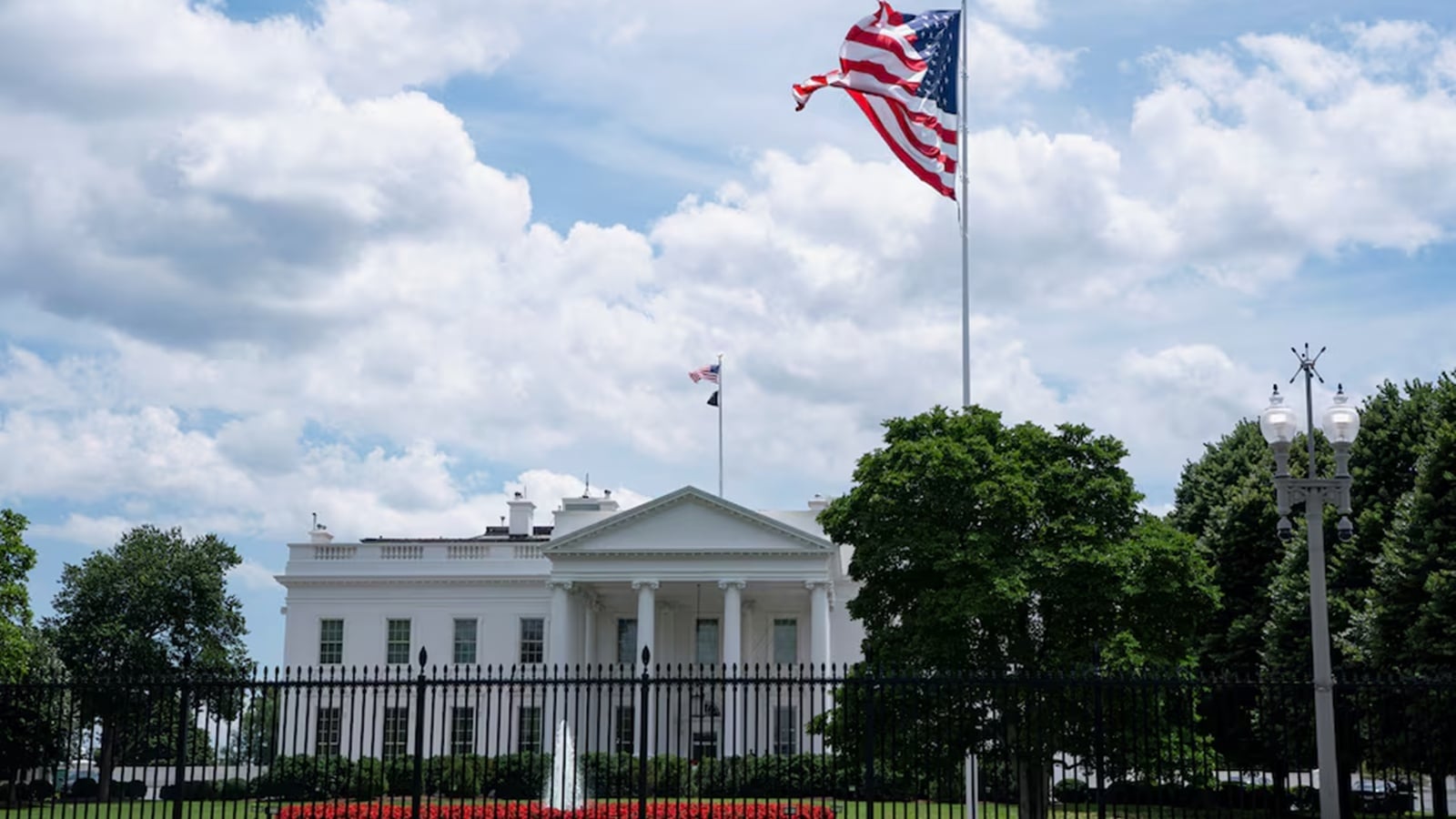
The air in Washington D.C. has a specific weight. On a Tuesday evening, it usually carries the scent of exhaust from idling black SUVs and the faint, swampy humidity rising from the Potomac. Tourists huddle near the iron fences of the White House, their camera shutters clicking in a rhythmic, mechanical pulse, trying to capture a piece of history to take home in a digital pocket. Then, the rhythm breaks.
The sound of an engine revving where it shouldn't be is the first crack in the glass. It isn't the low hum of a diplomatic motorcade. It is the desperate, strained whine of a vehicle pushed beyond its intended purpose. When the van struck the metal barricade, the noise didn't just echo; it swallowed the evening.
Metal groaned against metal. The perimeter, a complex web of reinforced steel and vigilant eyes, suddenly became the only thing that mattered in the world.
The Invisible Shield
We walk past these barriers every day without truly seeing them. They are part of the architecture of power, as much a fixture of the city as the marble columns of the Treasury Building or the soot-stained bricks of Lafayette Square. We call them "bollards" or "checkpoints" in the dry language of security briefings. But in the moment of impact, they are the thin, unyielding line between a Tuesday and a tragedy.
The driver of the van, a person whose name will eventually be cataloged in a police report and processed through a sprawling judicial machine, was met not with a chaotic scramble, but with a practiced, terrifyingly quiet efficiency. This is the duality of the capital. One moment, it is a park where children chase pigeons; the next, it is a fortress.
The Secret Service didn't shout for long. They moved.
Within minutes, the area was scrubbed of its civilian life. The tourists were ushered back. The streets were bled dry of traffic. Yellow tape, that flimsy yet authoritative ribbon of law, was stretched across the intersections of 17th Street and Pennsylvania Avenue. The silence that followed was heavier than the noise of the crash. It was the silence of a city holding its breath, waiting to see if this was an isolated moment of madness or the first domino in a longer, darker line.
The Human Cost of Constant Vigilance
Consider the officers who stand at these posts. To the passerby, they are statues in tactical vests. In reality, they are people who spend eight hours a day memorizing the gait of every pedestrian and the license plate of every delivery truck. They live in a state of permanent "what if."
When that van accelerated toward the barricade, those officers weren't just reacting to a traffic violation. They were reacting to the ghost of every threat that has ever been whispered in a briefing room. They carry the weight of the building behind them—not just the bricks and the mortar, but the symbolic gravity of the executive branch.
When the driver was taken into custody, the immediate threat evaporated, but the residue remained. You could see it in the way the locals walked a little faster as they skirted the edge of the restricted zone. You could see it in the way the media crews arrived, their long-lens cameras poking out like the snouts of hungry animals, looking for a narrative in the wreckage of a dented fender.
A Neighborhood in Shadows
The White House is a home, but it is also a target. This tension defines the lives of everyone who works in the surrounding blocks. Imagine being a barista at a coffee shop three blocks away. You hear the sirens. You see the road closures. You don't know if you should keep frothing milk or if you should look for the nearest exit.
This is the psychological tax of living in the center of the world.
The investigation into the driver’s motives will take weeks. There will be deep dives into social media histories, interviews with estranged family members, and a meticulous reconstruction of the path that led a van to a barricade at the most famous house in America. Was it a political statement? A mental health crisis? A tragic mistake of navigation?
In the immediate aftermath, the "why" matters less than the "is." The reality is a van crushed against a fence. The reality is a man in handcuffs. The reality is a city that has become so accustomed to the threat of violence that it can shut down and reboot with the cold precision of a computer.
The Anatomy of the Perimeter
The security of the White House isn't just about the men and women with badges. It is an intricate, layered system designed to bleed energy from an attack.
- The Outer Shell: The public sidewalks where the world gathers to protest, celebrate, and gawk.
- The Hardened Line: The steel and concrete obstacles designed to stop a multi-ton vehicle in its tracks.
- The Inner Sanctum: The heavily guarded grounds where the grass is manicured and the snipers watch from the roof.
The van hit the hardened line. It did exactly what it was engineered to do: it stopped the momentum. It absorbed the violence. It protected the interior at the cost of the exterior.
But as the tow truck eventually arrived to haul the mangled vehicle away, the physical damage seemed small compared to the ripples in the collective psyche. Every time a barricade is tested, the perimeter feels a little smaller. The distance between the public and their leaders feels a little wider.
The streets eventually reopened. The yellow tape was rolled up and tossed into the back of a patrol car. The tourists returned, though they stood a few inches further back from the fence than they had an hour before.
Life in Washington resumed its frantic, self-important pace. But the scuff marks on the barricade remained—a silver-grey scar on the armor of the city. We are left to wonder about the person behind the wheel and the many invisible barriers we build around ourselves to feel safe in a world where a van can turn a quiet Tuesday into a theater of war.
The sun set behind the Washington Monument, casting a long, thin shadow across the Ellipse. The lights of the White House flickered on, shining with a deceptive, peaceful glow. Inside, the business of the nation continued. Outside, the concrete sat in the dark, cold and unyielding, waiting for the next time the world decided to push against it.



