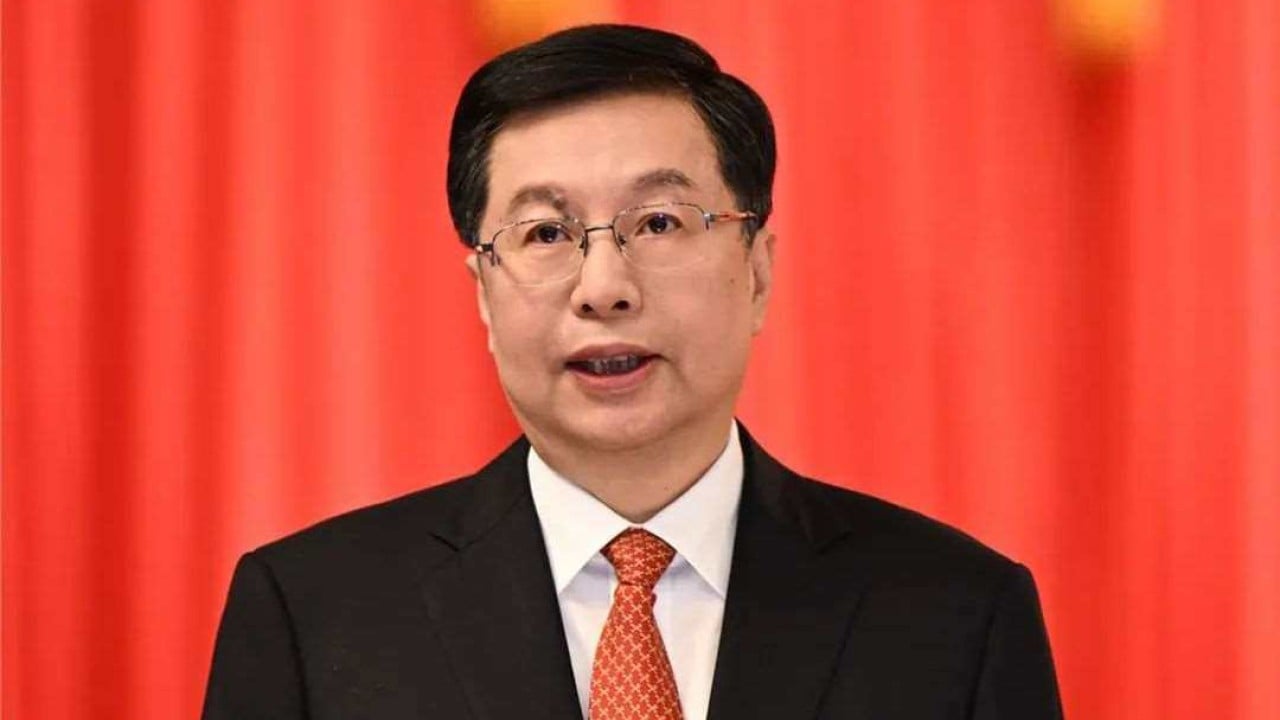
The Western media has a predictable script for Chinese political shakeups. A high-ranking official like the Mayor of Chongqing vanishes into the "shuanggui" disciplinary system, and the headlines immediately scream about a "crackdown" or a "tightening grip." They paint a picture of a paranoid central government hunting down dissidents.
They are missing the point entirely.
This isn’t about a moral crusade against graft. It isn’t about "cleaning up" the party. If you think the removal of a top-tier municipal leader is just about a few offshore accounts or a luxury watch collection, you are playing checkers while the CCP is playing high-stakes industrial reorganization. The investigation into Chongqing’s leadership is a cold, calculated performance review. In the modern Chinese administrative machine, "corruption" is the charge used when an official fails to deliver on the structural evolution required by the center.
Chongqing is not just another city. It is a 30-million-person test tube for inland urbanization and a critical node in the Dual Circulation strategy. When the mayor falls, it’s because the test tube is cracked.
The Myth of the Moral Crusade
Let’s dismantle the "anti-corruption" label. In any massive bureaucracy—whether it’s a Fortune 500 company or a national government—low-level friction (call it "leakage" or "corruption") is a built-in cost of doing business. Beijing knows this. They don't mobilize the Central Commission for Discipline Inspection (CCDI) just because someone took a bribe. They mobilize when that someone becomes a bottleneck.
Chongqing has a history of "independent kingdoms." From Bo Xilai to Sun Zhengcai, the city has been a graveyard for ambitious men who thought they could build a power base shielded from the capital’s direct oversight. The current investigation is a signal that Chongqing’s recent economic performance—specifically its struggle to pivot from heavy manufacturing to high-tech resiliency—is unacceptable.
The "lazy consensus" says this is about fear. I’ve spent a decade analyzing capital flows in emerging markets, and I can tell you: fear is a terrible motivator for GDP growth. The real goal here is alignment.
Why Chongqing is the Center of the Universe Right Now
To understand why the mayor is in the crosshairs, you have to understand what Chongqing was supposed to achieve by 2026.
- The Western Land-Sea New Corridor: This isn't just a railway. It is a geopolitical bypass. It connects Western China to Southeast Asia, circumventing the Malacca Strait. If Chongqing isn't hitting its logistical benchmarks, the entire national security strategy for trade is at risk.
- The Semiconductor Pivot: As the US-China tech war intensified, Chongqing was designated as a secondary hub for "mature node" chip production.
- Debt Management: The "Chongqing Model" was famously built on massive infrastructure spending financed by local government financing vehicles (LGFVs).
When a mayor is "under investigation," read between the lines. It means the LGFV debt has become unmanageable, or the tech pivot is stalled due to local protectionism. The CCDI isn't looking for stolen money; they are looking for the reason why the central directives are being diluted by local interests.
The Efficiency Trap
Most analysts argue that these purges create a "chilling effect" that slows down the economy because officials are too scared to make decisions.
That is wrong.
The purge is the solution to a different kind of slowing: the "middle-management drag." In a system where the state directs capital, the biggest threat to growth isn't a lack of liberty; it’s a lack of execution. If a provincial leader starts prioritizing their local network over national industrial policy, they become a friction point.
Removing them isn't about scaring the others into silence; it’s about replacing a legacy operator with a technocrat who will follow the 2026-2030 roadmap without question. It is the ultimate corporate restructuring.
The Cost of Disruption
Is there a downside? Of course. I’ve seen private equity firms in Shanghai freeze every deal the moment a municipal leader is detained. Nobody wants to be tied to the "wrong" network. The immediate result is a liquidity crunch in local projects.
But the CCP views this as a necessary short-term fever to break a long-term infection of provincial autonomy. They are willing to sacrifice six months of local growth to ensure ten years of centralized compliance.
Don't Ask "Who is Next"—Ask "What is Failing"
If you want to predict the next "anti-corruption" target, stop looking for scandals. Look for missed targets.
- Which province is failing its carbon emission quotas?
- Where is the "New Three" (EVs, lithium batteries, solar) production lagging?
- Which municipality is seeing a surge in "hidden debt" that threatens the national balance sheet?
The mayor of Chongqing didn't fall because he was "bad." He fell because he became an obstacle to the state's vision of a streamlined, high-tech, debt-controlled fortress economy.
Western investors keep waiting for "stability" to return to the Chinese political system. They fail to realize that this churn is the stability. It is a self-correcting mechanism designed to prune the branches that aren't bearing the right kind of fruit.
Stop looking for the smoking gun of a bribe. The "crime" was likely a spreadsheet that didn't add up for the planners in Beijing.
If you are waiting for the "crackdown" to end, you will be waiting forever. The purge is the process. The process is the policy.
Get used to it.