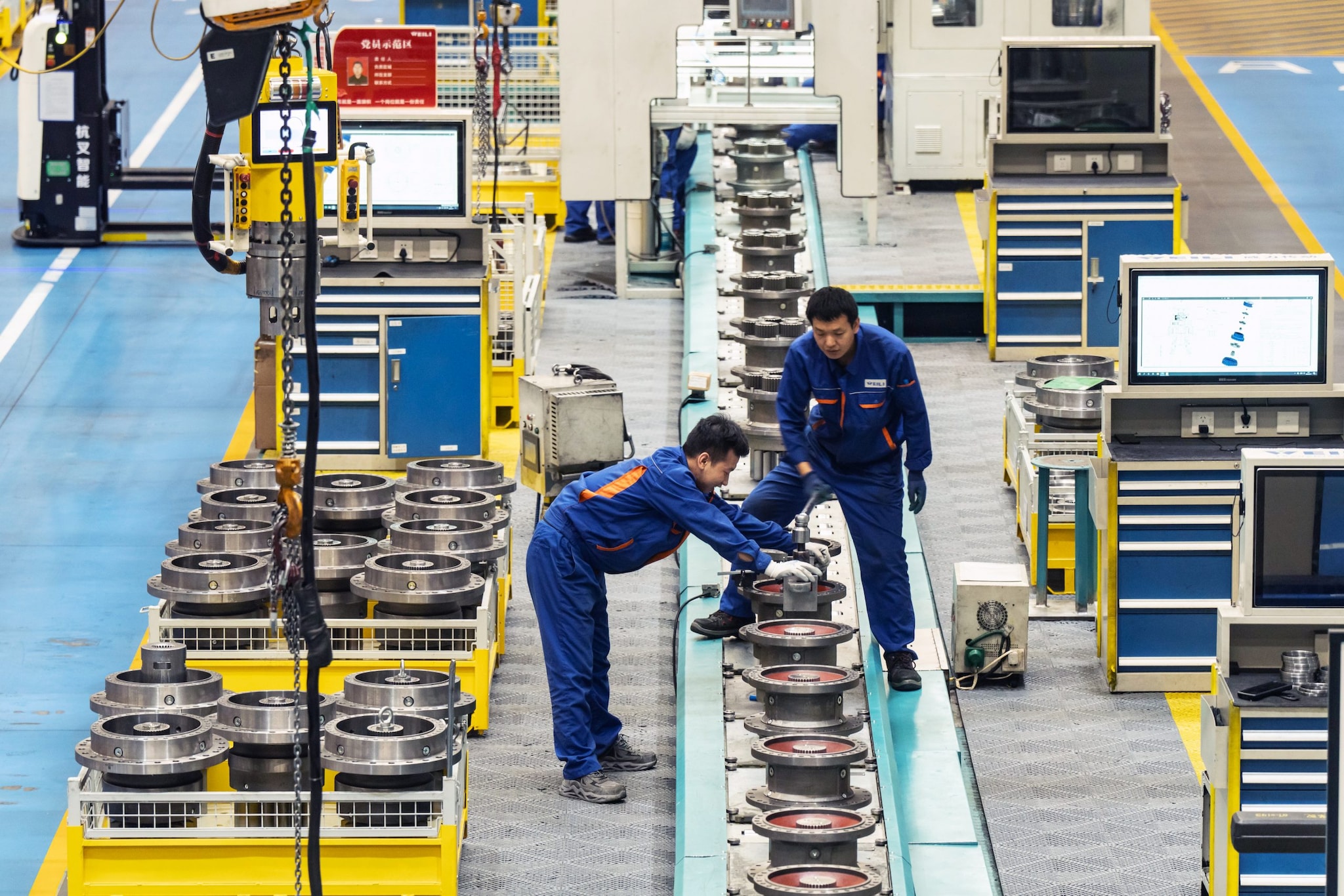
China’s factory floors are finally shaking off the chill of a three-year deflationary streak, but the warmth isn't coming from a domestic recovery. It’s coming from the heat of a burning Middle East. After thirty-six months of watching Producer Price Index (PPI) figures slide into the red, Beijing is seeing prices rise again. This shift marks a massive turning point for the global supply chain, yet it’s happening for all the wrong reasons.
The long-awaited exit from factory gate deflation isn't a sign of booming Chinese consumer confidence. Instead, it’s a direct result of the escalating Iran conflict and its stranglehold on global logistics. When oil prices spike and shipping lanes through the Red Sea become shooting galleries, the cost of making and moving "Made in China" goods goes up. For years, China exported deflation to the rest of the world. Now, it’s about to export inflation.
The end of cheap industrial goods
For three years, Chinese manufacturers fought a brutal price war just to keep their lights on. Excess capacity meant they had to slash prices to move inventory, which helped keep inflation lower in the West. That era is dead. Recent data shows the PPI has finally ticked into positive territory. This isn't just a rounding error on a spreadsheet. It’s a signal that the floor has been reached.
When you look at the raw numbers, the surge is driven by upstream costs. Mining, raw material processing, and energy-intensive industries are leading the charge. These aren't luxury goods. They’re the building blocks of everything from your smartphone to the steel in your skyscraper. If it costs more to power a factory in Guangdong because of geopolitical chaos five thousand miles away, you’re going to pay for it at the checkout counter in London or New York.
The Iran war has acted as a catalyst. Energy prices are the most obvious factor, but the secondary effects are just as punishing. Insurance premiums for cargo ships have skyrocketed. Shippers are taking the long way around Africa, adding weeks to transit times and burning millions of gallons of extra fuel. China’s factories, which sit at the end of these complex supply chains, are forced to bake these costs into their wholesale prices. They can't swallow the losses anymore.
Why internal demand isn't the hero here
Beijing would love for you to believe this price hike stems from a roaring domestic "dual circulation" economy. It doesn't. While the government has thrown everything but the kitchen sink at the property sector and local debt, the Chinese consumer remains famously frugal. People are saving, not spending.
The real driver is the supply side. China has spent the last decade building enough factory capacity to supply two worlds, not just one. When global demand cooled, they had a massive surplus. That surplus is now being revalued because the cost of production inputs is non-negotiable. You can’t "innovate" your way out of a 30% jump in crude oil or a 50% increase in shipping containers.
We’re seeing a shift from "volume-driven" growth to "cost-push" pricing. Manufacturers who were barely breaking even are finally raising their quotes. They’re betting that the world has no choice but to pay up. They’re probably right. Despite all the talk of "near-shoring" or moving production to Vietnam, China’s industrial infrastructure is still too dominant to ignore overnight.
The ripple effect on global interest rates
This move out of deflation is a nightmare for central banks in the West. For the past year, the Federal Reserve and the European Central Bank have been banking on "goods disinflation" to do the heavy lifting in their fight against high prices. They assumed that even if services stayed expensive, cheap imports from China would balance the scales.
That math just broke. If China starts exporting higher prices, the "last mile" of the inflation fight becomes an uphill climb. We’re looking at a scenario where interest rates might have to stay higher for much longer than the markets currently expect. The hope for a quick return to the 2% inflation target looks increasingly like a fantasy when the world’s factory is raising its rates for the first time in years.
Consider the impact on the automotive industry. China is the king of EV components. If the cost of processed lithium and copper rises due to energy spikes and logistical hurdles, the price of an electric car in Germany goes up. It’s a direct link. There’s no shield against this kind of systemic cost increase.
Geopolitical risk is the new overhead
In the past, a factory manager in Shenzhen worried about labor costs or environmental regulations. Today, they’re watching drone strikes in the Middle East. Geopolitics is no longer a "macro" concern for ivory tower analysts; it’s a line item on the profit and loss statement.
The war involving Iran has created a permanent risk premium. Even if a ceasefire were signed tomorrow, the realization that global trade routes are this fragile has changed the game. Companies are holding more "just-in-case" inventory, which ties up capital and adds to the final price tag. China’s exit from deflation is the first clear evidence that the peace dividend of the last thirty years has officially evaporated.
Realities of the new pricing power
I’ve talked to procurement officers who are seeing their first price hike notices from Chinese suppliers in years. The tone has changed. It used to be a negotiation; now it’s an ultimatum. "Take it or leave it" is the new vibe because the suppliers know their own margins are razor-thin. They aren't gouging; they’re surviving.
This isn't just about big-ticket items. It’s the small stuff. Fasteners, plastic resins, electronic sensors—the "boring" parts of the world economy. These are the items where China has the most leverage. When these prices move, everything moves. It’s a slow-motion wave that will take six to nine months to fully hit the retail level.
Strategy for a high-cost environment
You need to stop waiting for prices to "normalize" back to 2021 levels. They aren't going back. The combination of Chinese industrial re-pricing and Middle Eastern instability has set a new, higher floor for the global economy.
- Lock in long-term contracts now. If you’re buying from China, the price you see today is likely the lowest it will be for the next eighteen months. The deflationary cushion is gone.
- Audit your shipping exposure. Stop relying on spot rates for freight. The volatility in the Middle East means the Suez Canal is a gamble, not a guarantee.
- Watch the PPI, not just the CPI. The Producer Price Index is the leading indicator. By the time it hits the Consumer Price Index (CPI), the opportunity to pivot your budget has already passed.
- Diversify, but be realistic. Moving production takes years. In the meantime, find ways to reduce the weight or volume of your products to offset the inevitable rise in shipping costs.
The transition from a deflationary China to an inflationary one is the most significant economic shift of 2026. It’s messy, it’s driven by conflict, and it’s going to make everything more expensive. Stop planning for a recovery and start planning for a sustained period of high input costs. The era of the "China Discount" is over.