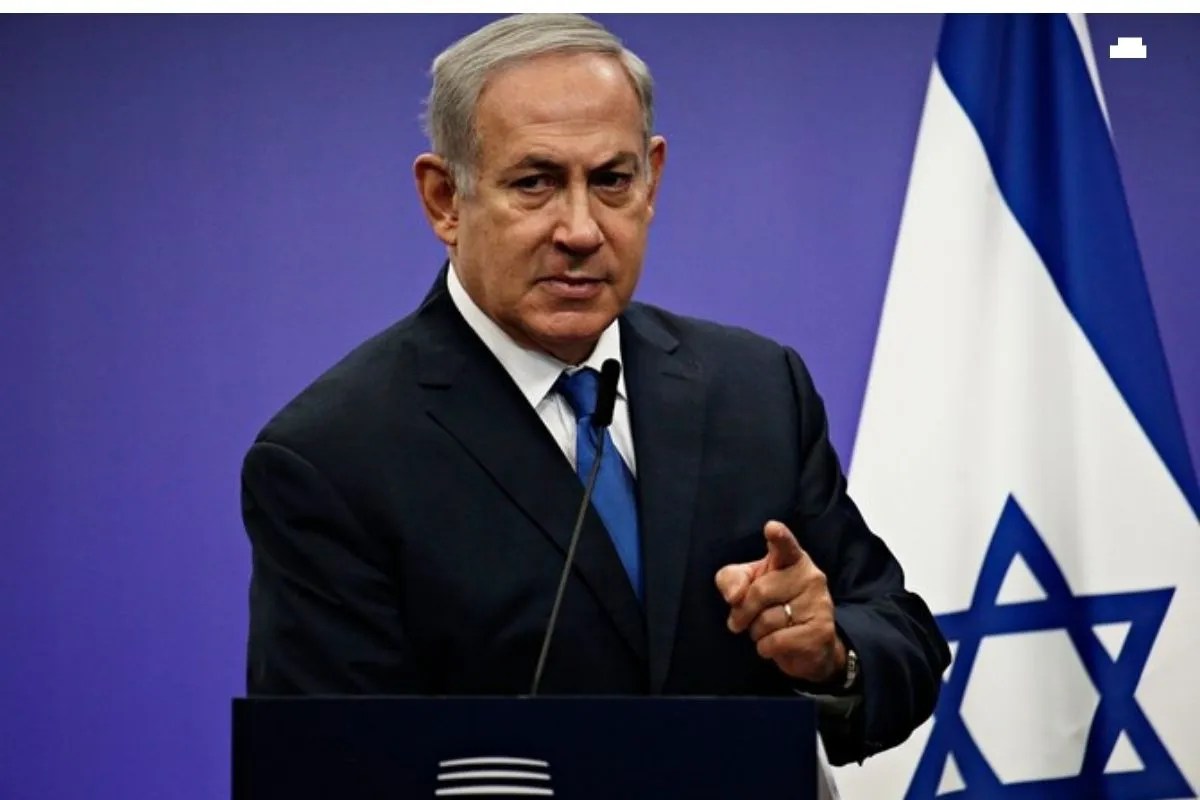
The persistent question of whether Benjamin Netanyahu is actively pulling the United States into a regional conflagration is no longer a matter of conspiratorial whispers in the corridors of the State Department. It is the defining tension of modern geopolitics. While the Israeli Prime Minister’s recent public addresses frame the military alliance as a unified front against a common existential threat, the reality on the ground suggests a far more complex and friction-filled dynamic. Netanyahu is not merely "drawing" the U.S. into a war; he is leveraging a decades-old security architecture to ensure that American interests remain inextricably tied to his own political survival and strategic vision for the Middle East.
This isn't a passive slide into conflict. It is a deliberate orchestration. By expanding the theater of operations from Gaza into Lebanon and maintaining a high-stakes standoff with Tehran, the Israeli government has effectively forced Washington’s hand. The U.S. finds itself in a position where it must provide defensive cover for an ally whose offensive actions it frequently cannot control and occasionally does not even support.
The Strategy of Forced Alignment
Netanyahu’s approach relies on the "defense-offense loop." Every time Israel takes a pre-emptive or retaliatory strike against Iranian proxies, it increases the risk of a massive counter-strike against its own territory. Because the U.S. is treaty-bound and politically committed to the "ironclad" defense of Israel, Washington must deploy carrier strike groups and missile defense batteries to the region.
This creates a paradox. The presence of U.S. forces acts as a deterrent, but it also provides a safety net that allows the Israeli Defense Forces (IDF) to take higher risks. Without that American shield, the cost-benefit analysis of striking sensitive targets in Beirut or Isfahan would look very different. Netanyahu understands this math perfectly. He knows that as long as the U.S. is parked in the Eastern Mediterranean, he has the tactical freedom to push boundaries that would otherwise be suicidal.
Decoding the Prime Minister’s Public Defiance
When Netanyahu speaks to the international press or goes live on social media to "answer" accusations of dragging America into war, he employs a specific rhetorical device. He merges the interests of the two nations until they are indistinguishable. He argues that Israel is the "fortress of the West" and that by fighting Hamas, Hezbollah, and the IRGC, he is fighting America’s enemies so that American boots never have to hit the ground.
It is a persuasive argument for a domestic U.S. audience, but it ignores the friction at the top of the command chain. Behind the scenes, the friction is palpable. Military analysts have noted a recurring pattern: Washington requests "de-escalation," and within forty-eight hours, the IDF executes a high-profile assassination or a massive bombing campaign that resets the clock. This isn't a failure of communication. It is a clear statement of autonomy from Jerusalem. Netanyahu is signaling that while he appreciates the weapons and the diplomatic cover, he will not allow the White House to dictate the parameters of Israeli security.
The Regional Chessboard and the Iranian Factor
We have to look at the "Ring of Fire" strategy employed by Tehran. For years, Iran has built a network of proxies designed to bleed Israel through a thousand cuts. From Netanyahu’s perspective, the status quo prior to the current conflict was a slow-motion disaster. His goal is to break that ring entirely.
However, breaking that ring requires a level of military force that could easily ignite a total regional war. If that happens, the U.S. cannot stay on the sidelines. The global economy, dependent on the stability of the Strait of Hormuz, would face an immediate shock. By pushing for a "total victory," Netanyahu is essentially gambling with the global energy market and American naval assets.
Critics within the Israeli security establishment—former Mossad and Shin Bet chiefs—have warned that this path leads to a "forever war" that relies entirely on American indulgence. They argue that Netanyahu is prioritizing his legacy and his legal battles over a sustainable diplomatic framework.
The Domestic Political Engine
One cannot analyze this geopolitical maneuvering without acknowledging the domestic pressure cooker. Netanyahu leads the most right-wing coalition in Israel’s history. His partners, like Itamar Ben-Gvir and Bezalel Smotrich, view the U.S. administration’s calls for restraint as an obstacle to their long-term goals in the West Bank and Gaza.
Netanyahu is performing a high-wire act. He must satisfy these hardliners to keep his government from collapsing, while simultaneously ensuring the flow of American munitions. He does this by framing himself as the only leader capable of standing up to Washington when necessary. Every time he publicly "clashes" with the U.S. President over a ceasefire or a red line, his stock rises with his base. The tension with America isn't a bug in his political strategy; it is a feature.
The Intelligence Gap and Operational Secrecy
A significant point of contention remains the level of intelligence sharing—or the lack thereof—preceding major operations. There have been multiple instances in the last eighteen months where the U.S. was notified of a major strike only as the planes were in the air, or after the missiles had hit.
This creates a dangerous vacuum. If the U.S. is not part of the planning process, it cannot prepare for the fallout. Yet, it is the U.S. that is expected to manage the diplomatic and military "clean-up" once the smoke clears. This "fait accompli" style of warfare is what frustrates the Pentagon the most. It moves the U.S. from the role of a strategic partner to that of a reactive bodyguard.
The Erosion of Strategic Patience
While the military-to-military relationship between the U.S. and Israel remains deep, the political relationship is fraying. We are seeing a shift in how the American public views this involvement. For decades, support for Israel was a bipartisan certainty. Today, it is a point of intense domestic debate.
Netanyahu’s gamble is that the institutional inertia of the U.S. defense establishment will always outweigh the political discomfort of any given administration. He is betting that the U.S. cannot afford to let Israel lose, which gives him the leverage to ignore American advice on how to win. It is a brutal, cold-blooded calculation that assumes the U.S. is essentially trapped in the relationship.
The True Cost of Tactical Success
Israel has achieved remarkable tactical successes in recent months. The decapitation of Hezbollah’s leadership and the systematic dismantling of Hamas’s tunnels are feats of intelligence and military prowess. But tactical success does not equal a strategic end-state.
Without a clear plan for the "day after," these military gains only serve to prolong the vacuum that the U.S. is desperate to fill with an international coalition. By refusing to commit to a political path that involves regional partners or Palestinian sovereignty, Netanyahu ensures that the U.S. must remain militarily committed to prevent a total collapse.
The Shift Toward a Multi-Front Reality
The war is no longer contained. It is a multi-front conflict involving Yemen, Iraq, Syria, Lebanon, and Gaza. In each of these theaters, the U.S. is being forced to take kinetic action—whether it is intercepting Houthi drones or striking militia depots in Iraq.
This is exactly what the "dragging in" narrative refers to. The U.S. did not set out to engage in a naval war in the Red Sea this year. It was forced into it as a direct consequence of the escalating cycle of violence between Israel and the Iranian axis. Netanyahu’s response is that the U.S. should have been more aggressive toward Iran all along. He views his actions as a necessary catalyst to force the U.S. into a confrontation he believes is inevitable.
Analyzing the Leverage Points
- Ammunition Pipelines: The IDF is heavily reliant on American-made 2,000-pound bombs and interceptors for the Iron Dome. This is Washington's primary point of leverage, yet it is rarely used for fear of leaving Israel vulnerable.
- Diplomatic Veto: In the UN Security Council, the U.S. remains the sole barrier between Israel and crippling international sanctions.
- Intelligence Integration: The sheer volume of data shared between the two nations makes a clean break impossible. They are digitally and operationally grafted together.
Netanyahu uses these points of connection as anchors. He knows that the cost for the U.S. to "unplug" from this conflict is higher than the cost of staying in it.
The question isn't whether Netanyahu "fooled" or "tricked" the United States. He has been remarkably transparent about his goals: the total destruction of his enemies and the restructuring of Middle Eastern security with Israel as the dominant power. The real story is the American realization that being a superpower sometimes means being held hostage by the ambitions of a smaller, more determined partner who has much more to lose on a personal level.
The friction will continue because the objectives are fundamentally misaligned. Washington wants a stable, quiet Middle East so it can focus on the Pacific. Netanyahu wants a transformed Middle East, regardless of the noise it creates. Until those two visions are reconciled, the U.S. will remain a reluctant but necessary participant in a war it did not start and cannot seem to end.
The next time you see the Prime Minister go live to defend his record, look past the rhetoric. Observe the movement of carrier groups and the shipment of munitions. That is where the real answer lies.