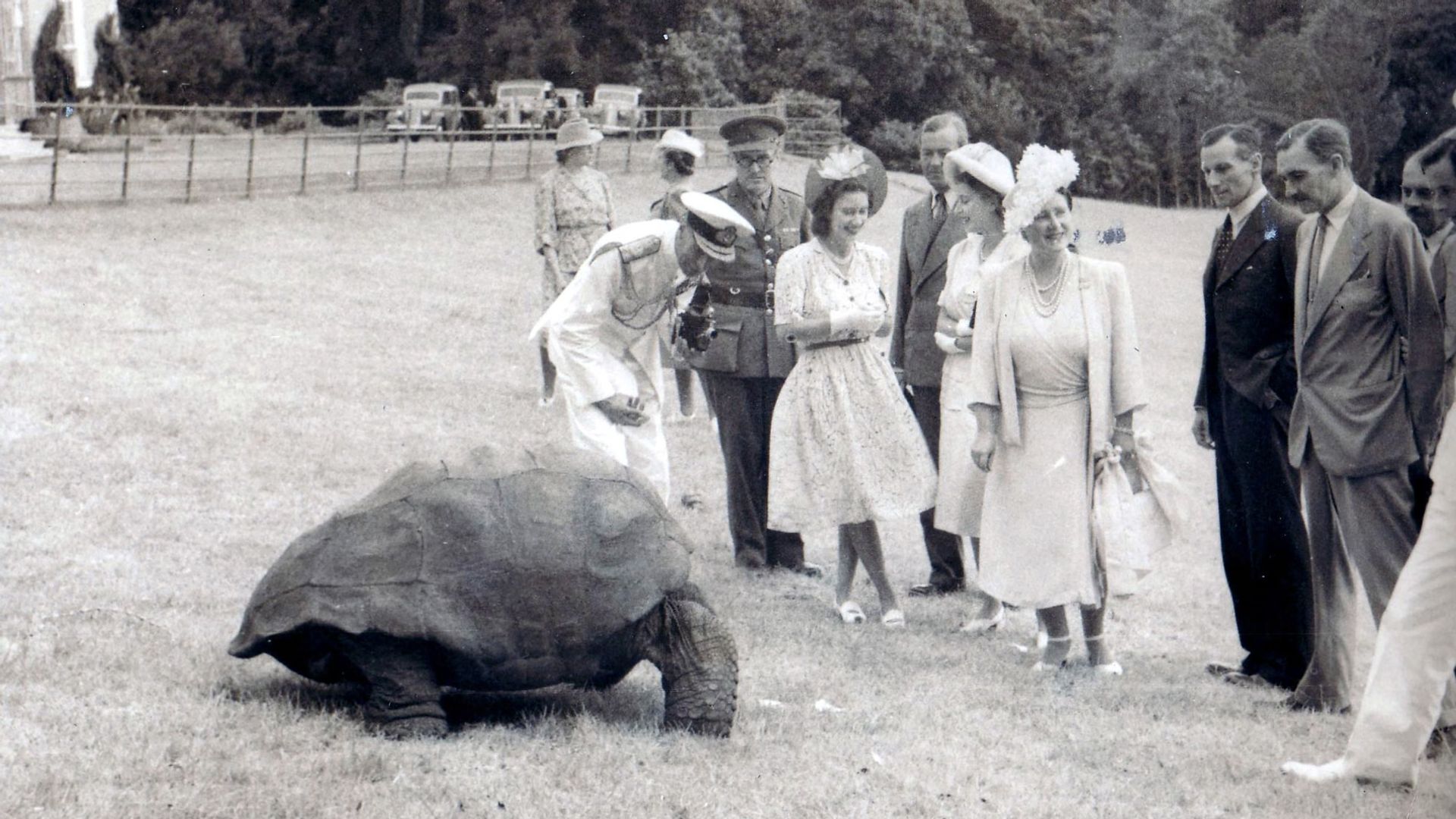
Jonathan, a Seychelles giant tortoise living on the island of Saint Helena, has survived thirty-one British monarchs, two world wars, and the invention of the internet. At 192 years old, he is the oldest known living land animal on the planet. But the latest threat to his legacy isn’t biological decay or environmental change. It is the cynical machinery of decentralized finance. Recent reports have linked the image and "brand" of this venerable reptile to a series of aggressive cryptocurrency schemes, leaving enthusiasts and conservationists grappling with a bizarre intersection of ancient biology and modern financial fraud.
The core of the issue lies in the exploitation of Jonathan’s "uncancelable" reputation. In a market saturated with fly-by-night projects and anonymous founders, scammers are desperate for symbols of longevity. What better mascot than a creature that has literally outlasted every financial system currently in operation?
By tying a digital asset—often a "meme coin"—to Jonathan’s likeness, bad actors attempt to manufacture an aura of permanence and trust. It is a psychological play designed to bypass the skepticism of retail investors who are exhausted by the high velocity of modern rug pulls. This isn't just a niche internet oddity; it is a calculated move to weaponize one of the few remaining symbols of pure, unadulterated endurance.
The Anatomy of the Tortoise Token Trap
To understand how a nearly two-century-old tortoise ends up on a blockchain, you have to look at the mechanics of the "Fair Launch" narrative. Most of these projects claim that the tokens are a tribute to Jonathan, with vague promises that a portion of the transaction fees will go toward his care or broader conservation efforts on Saint Helena.
It is almost always a lie.
The Saint Helena government and the professionals who manage Jonathan’s welfare have no official ties to these digital assets. Yet, the developers use high-resolution images of Jonathan—often scraped from travel blogs or news outlets—to populate their websites and Telegram groups. They create a sense of community around the "slow and steady" mantra, contrasting it with the "pump and dump" nature of other coins.
The irony is thick enough to choke on. While preaching the virtues of Jonathan’s patience, the developers are usually dumping their own developer-held wallets the moment the price hits a predetermined peak. The investors, lured by the heartwarming story of a 192-year-old tortoise, are left holding worthless digital entries while the "conservators" vanish into the anonymity of the blockchain.
Why the Elderly and Nature Lovers are the New Targets
Traditional crypto scams used to target tech-savvy young men looking for "the moon." That has changed. By using animals like Jonathan, scammers are casting a wider net. They are fishing for people who love nature, history, and the idea of "slow wealth."
These victims are often less familiar with how to audit a smart contract or check liquidity locks. They see a picture of a tortoise they recognize from a BBC documentary and feel a false sense of security. The "brand" of the animal acts as a proxy for the due diligence the investor should be doing.
This is a predatory shift in the industry. It moves the deception away from technical jargon and into the realm of emotional resonance. When a project claims to be "as enduring as Jonathan," it isn't making a technical claim; it is making a moral one. And in the unregulated Wild West of meme coins, moral claims are the easiest to fake.
The Saint Helena Connection and the Reality of Conservation
Saint Helena is a remote volcanic island in the South Atlantic. It is not a high-tech hub. The people responsible for Jonathan’s daily life—veterinarians like Joe Hollins—are focused on his diet of apples, carrots, and cucumbers, not the price of a sub-penny digital asset.
The disconnect between the island’s reality and the digital hype is staggering. Most of these crypto projects claim to be "saving" Jonathan, but he doesn't need saving in the way they suggest. He is a protected national treasure with a dedicated budget. The idea that he needs a community-led DAO (Decentralized Autonomous Organization) to fund his lettuce intake is a fabrication designed to pull at the heartstrings of the uninformed.
The Problem with Permissionless Branding
One of the greatest vulnerabilities in our current legal framework is the inability to protect the "personality rights" of an animal. If a celebrity’s likeness is used to sell a scam, they have a legal team ready to file suit. A tortoise in the middle of the South Atlantic does not have a lawyer.
This creates a vacuum that scammers are happy to fill. They can use Jonathan’s name, his history, and his image without fear of a cease-and-desist order that actually has teeth. Since the developers are often spread across jurisdictions with no extradition or clear cyber-fraud laws, they operate with total impunity.
- Zero Accountability: Developers remain anonymous behind "dev" handles.
- Stolen Imagery: Using public domain or news photos to create a false sense of legitimacy.
- False Philanthropy: Claiming donations are being made to Saint Helena without providing on-chain proof of a wallet address belonging to the island's government.
How to Spot the Scam Before the Shell Cracks
If you encounter a project using Jonathan—or any famous animal—as its centerpiece, there are three immediate red flags that indicate a scam.
First, look for the "Charity Wallet." If a project claims to support Jonathan’s care, that wallet address should be clearly linked to a verified entity on Saint Helena. If the tokens are just sitting in a wallet controlled by the "marketing team," the money is never leaving the ecosystem.
Second, examine the liquidity. Is it locked? For how long? Scammers using the "slow and steady" narrative often lock liquidity for a few weeks to build trust, only to pull the rug the moment the lock expires. A tortoise that has lived for 192 years demands a liquidity lock that lasts longer than a month.
Third, check the social media presence. Scam projects rely on bots to create a "buzz." If the Twitter comments are nothing but "To the moon!" and "Jonathan is the king!" without any substantive discussion of the project’s utility or the actual logistics of the conservation efforts, it is a choreographed performance.
The Failure of Platforms to Protect the Vulnerable
Centralized exchanges and social media platforms bear a significant portion of the blame. They allow these projects to advertise and trend without any verification of the claims being made. A simple "blue check" on a social media account is often enough to convince a novice investor that the project is legitimate.
We are seeing a total breakdown in the gatekeeping of financial products. When a tortoise becomes a financial instrument, the system has failed. The technology that was supposed to "bank the unbanked" is instead being used to "fleece the uninformed" using the most innocent mascot imaginable.
The Long-Term Cost to Real Conservation
The most damaging aspect of the Jonathan crypto scam isn't the lost money. It is the "crying wolf" effect. When people get burned by a fake tortoise-themed charity coin, they become cynical about real conservation efforts.
The next time a legitimate organization tries to use digital assets for transparent, traceable conservation funding, they will be met with a wall of skepticism. The scammers are poisoning the well for future innovations that could actually help endangered species. They are trading the long-term potential of blockchain-based philanthropy for a quick payday.
Jonathan continues to graze on the lawns of Plantation House, oblivious to the fact that his name is being used to liquidate the savings of people thousands of miles away. He has survived the rise and fall of empires, but he may not survive the era of the digital grift without his reputation being permanently stained.
The "slow and steady" approach to investing is a sound philosophy, but applying it to a meme coin named after a tortoise is a recipe for disaster. Real wealth, much like Jonathan’s lifespan, is built over decades through patience and tangible value. It is never found in a 24-hour trading cycle on a decentralized exchange.
If you want to support Jonathan, send a postcard to Saint Helena or donate to a verified terrestrial conservation charity. Do not buy a token. The only person getting "steady" gains from a tortoise coin is the person who launched it. Stop looking for shortcuts to a 192-year-old’s endurance.


