The myth of the impenetrable sky died over Jerusalem this weekend. For years, the world watched the Iron Dome and Arrow systems pluck rockets from the atmosphere with the clinical precision of a video game, but Sunday’s sirens in the Holy City told a different story. As Iranian ballistic missiles streaked across the Judean hills, the "99% interception rate" touted in previous years felt like a relic of a simpler era. The reality on the ground is that Tehran has finally found the mathematical and mechanical limit of Israel’s multi-layered defense.
While regional outlets focused on the panic in the streets, the real story is the strategic collapse of "Interception Dominance." In this latest salvo, Iran demonstrated it has mastered the art of saturation, using high-volume, multi-vector launches that force the Arrow-3 and David’s Sling systems into a "Sophie’s Choice" of target prioritization. When 200 missiles arrive simultaneously, no computer on earth can protect every square meter of a nation.
The Failure of the Iron Shield
The sophisticated defense network that defines Israeli security is currently facing a crisis of attrition. During the attacks on March 21 and 22, the sheer volume of Iranian fire succeeded in doing what years of proxy warfare could not: it physically exhausted the supply of interceptor missiles. Each Arrow-3 interceptor costs roughly $3.5 million to produce. Iran is firing missiles that cost a fraction of that, effectively winning a war of economic and industrial endurance.
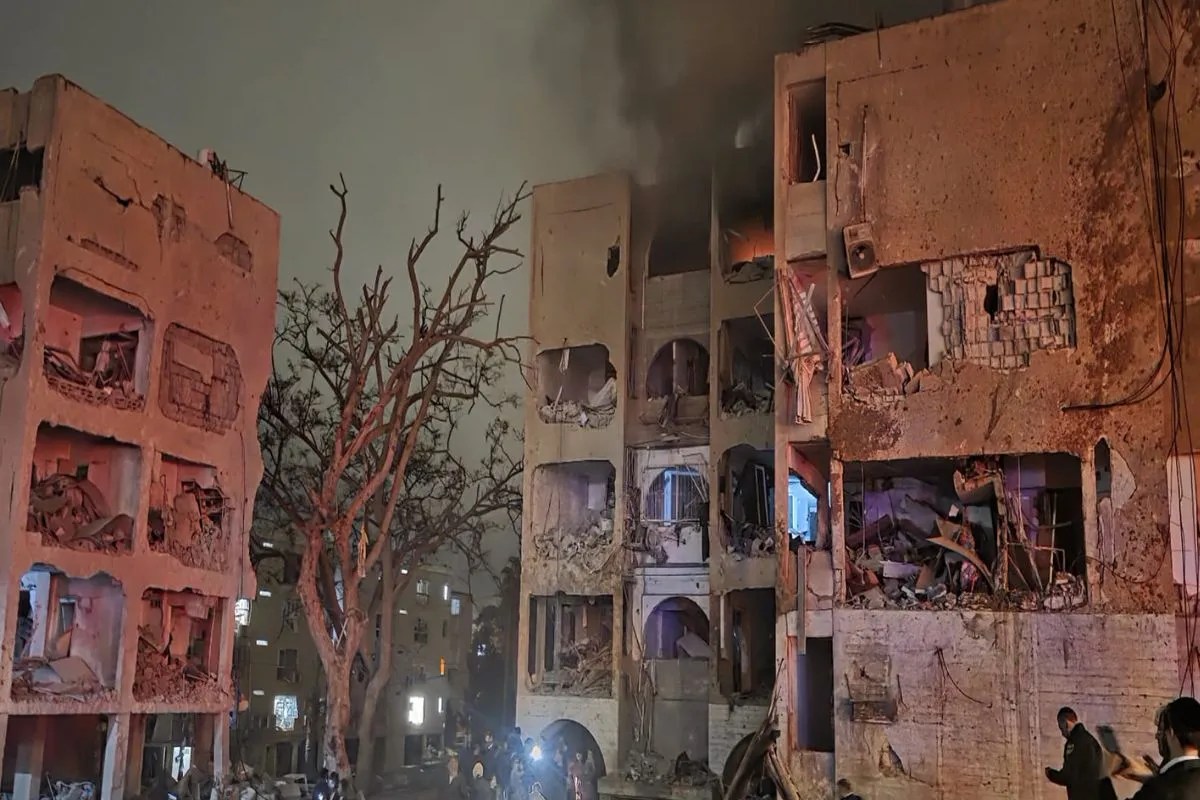
Evidence from impact sites in Dimona and Arad suggests that several Iranian warheads were not intercepted at all, but rather "partially engaged." This is a technical distinction with deadly consequences. An interceptor might hit the body of a missile, but if the warhead remains intact, it continues its ballistic trajectory. Photos from Jerusalem’s Old City show heavy warhead fragments impacting less than a quarter-mile from the Western Wall. The debris was not a random "falling fragment" but a functional, unexploded munition that survived the mid-air collision.
Why the Systems Stalled
Interception technology relies on a predictable arc. Iran’s new tactics include the use of multi-stage launch vehicles—technology borrowed from their "satellite" program—to vary the reentry speed and azimuth of their payloads. By attacking from the north, south, and east simultaneously, they have rendered directional radar arrays less effective.
- Saturation: Firing more projectiles than the system has ready-to-launch interceptors.
- Decoys: Mixing sophisticated missiles with cheap "blind" rockets to soak up expensive defense assets.
- Warhead Resilience: Hardening the explosive tips to survive the shock of a near-miss interception.
The 4,000 Kilometer Problem
Perhaps the most chilling revelation of the last 48 hours is the confirmed range extension of the Iranian arsenal. Former defense officials have noted that missiles are now reaching targets from distances of nearly 4,000 kilometers. This does not just threaten Tel Aviv; it puts every European capital within the crosshairs.
This isn't a gradual improvement. It is a technological leap achieved through a clandestine two-stage launch process. By using a lighter warhead and a more efficient fuel mix, Tehran has moved from a regional threat to a transcontinental one. The IDF’s inability to preemptively strike these mobile launch sites suggests an intelligence gap as wide as the defensive one.
The End of Calibrated Retaliation
For decades, the Middle East functioned on a "tit-for-tat" logic. You hit a drone base; they hit a shipping vessel. Those days ended when the first impacts were recorded in residential neighborhoods in Dimona this Saturday. The current conflict is no longer a choreographed display of strength. It is an unbridled escalation aimed at regime survival.
Iran’s leadership, now under the influence of harder-line factions following recent internal shifts, has abandoned the "patience" strategy. They are now practicing "escalation dominance," a theory that suggests you can win a conflict by being the party willing to take the most reckless risks. By targeting areas near nuclear facilities and civilian centers, they are signaling that the old rules of engagement are buried.
The Cost of the Empty Sky
The psychological impact on the Israeli populace cannot be overstated. When sirens sound in Jerusalem, it is not just a warning; it is a reminder that the technology they were told would always save them is fallible. The medical centers in the south are currently treating hundreds of people, many for "indirect" injuries—stress-induced cardiac events and trauma from the sheer violence of the impacts.
The government's current stance is one of forced confidence, promising a "deadly and surprising" response. But a response does not fix a broken shield. If the interceptors cannot keep up with the incoming fire today, there is no reason to believe they will tomorrow. The industrial capacity to replenish these systems takes months, while a missile can be rolled out of a mountain silo in minutes.
The regional powers are now watching a weakened giant. If the Iron Dome is no longer a guarantee of safety, the entire security architecture of the Middle East must be rewritten. The flares over the Temple Mount on Friday night weren't just signs of a battle; they were the flickering lights of an old era of warfare going out.
Israel must now decide if it can afford to keep playing defense in a game where the opponent has found a way to bypass the goalie. The next move won't be about intercepting missiles; it will be about the brutal necessity of ending the threat at the source, regardless of the global fallout.
Would you like me to analyze the specific technical specifications of the Iranian two-stage missiles used in the Jerusalem strike?