The smoke hanging over Tehran on Day 26 of the joint US-Israeli offensive is no longer just the byproduct of exploding munitions; it is the physical manifestation of a collapsed regional order. As of Wednesday, March 25, 2026, the strategy dubbed Operation Epic Fury has transitioned from a decapitation strike into a grinding war of attrition that neither Washington nor Jerusalem seems prepared to conclude. While President Donald Trump signals an openness to a 15-point "peace deal," the reality on the ground is a relentless expansion of the target list that now includes civilian infrastructure and naval assets.
This is not a surgical strike. It is a fundamental dismantling of a sovereign state's capacity to function.
The Strategy of Decapitation Meets a Hydra
The conflict began on February 28 with the assassination of Supreme Leader Ali Khamenei. The gamble was simple: kill the head, and the body—the Islamic Revolutionary Guard Corps (IRGC) and the "Axis of Resistance"—would wither. Instead, the regime has proved more resilient and decentralized than Western intelligence projected. The swift elevation of Mojtaba Khamenei as the new Supreme Leader suggests that the clerical and military establishment had a "break glass" succession plan that few in the Pentagon took seriously.
While the US Central Command (CENTCOM) touts the destruction of 190 ballistic missile launchers, Iran has pivoted to a "mosquito fleet" strategy. They are using smaller, mobile platforms to harass the USS Abraham Lincoln and choke the Strait of Hormuz. The reported strike on a US F/A-18 Hornet and the forced repositioning of a carrier strike group prove that even a degraded Iranian military can still draw blood.
The 15 Point Mirage
Washington’s latest diplomatic overture—a 15-point ceasefire plan—is being framed as a generous exit ramp. It isn't. The proposal demands the total abandonment of Iran’s nuclear program, the reopening of the Strait of Hormuz under Western supervision, and a permanent end to missile development.
Tehran’s rejection was immediate. From their perspective, the US is "negotiating with itself." Why would a regime that has already lost its Supreme Leader and seen 15,000 munitions drop on its soil suddenly agree to terms that amount to total surrender?
The Iranian counter-demands are equally "maximalist":
- A complete end to US and Israeli "aggression."
- Guaranteed, legally binding reparations for war damages.
- International mechanisms to prevent future assassinations.
There is no middle ground here. We are witnessing two sides speaking different languages of power while the civilian death toll climbs past 1,500.
The Invisible Toll on Global Markets
While the media focuses on the flash of cruise missiles over Isfahan, the real "Epic Fury" is being felt at the gas pump and in the boardrooms of East Asia. The closure of the Strait of Hormuz has sent oil prices screaming past $110 per barrel.
In the United States, nearly half of the population is now "extremely concerned" about their ability to afford fuel. This domestic pressure is the ticking clock that Tehran is counting on. They know that while they cannot win a conventional war against the 50,000 US troops now stationed in the Middle East, they can win a war of economic endurance.
Interestingly, a "Tehran-approved" shipping lane has emerged. Reports indicate that several vessels, including Chinese tankers, are paying "protection fees" directly to the IRGC for safe passage. This creates a bizarre, two-tier maritime economy where those willing to fund the Iranian war machine can bypass the blockade, further undermining the US-led sanctions regime.
Israel’s Security Zone Gamble
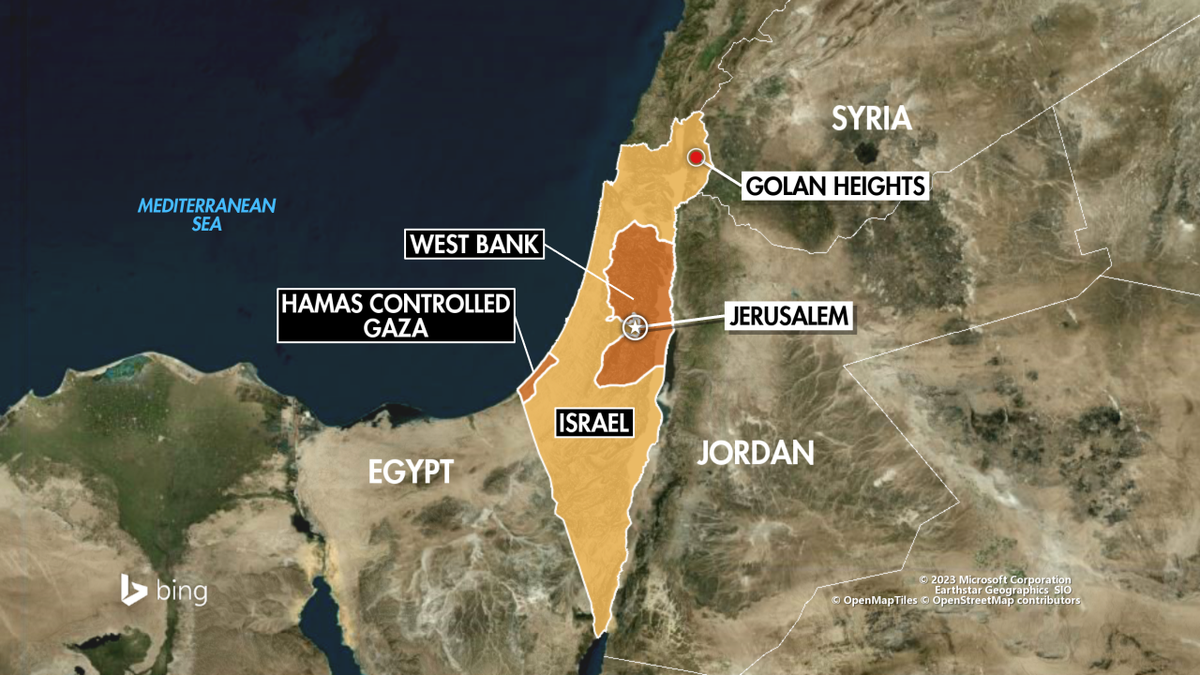
On the northern front, Israel has announced a 30-kilometer "security zone" inside Lebanon. This is a haunting echo of the 1982 invasion, and the risks are identical. By pushing Hezbollah back, Israel hopes to stop the shower of cluster munitions that recently hit Kiryat Shmona.
However, "buffer zones" have a historical habit of becoming permanent quagmires. Hezbollah leader Naim Qassem has already vowed to fight "without limits," and with the IRGC’s command structure now operating under a "total war" mindset, the distinction between the war in Iran and the war in Lebanon has evaporated. It is now one single, contiguous theater of operations.
The Nuclear Brinkmanship
The most chilling development of Day 26 is the strike near Dimona. An Iranian missile evaded the world’s most sophisticated air defense layers to strike near Israel’s primary nuclear facility. This wasn't a miss; it was a message. Iran is signaling that despite 26 days of bombardment, their "second-strike" capability remains intact.
Meanwhile, the US-Israeli coalition has begun targeting Iranian nuclear sites like Bushehr. This moves the conflict into a perilous territory where environmental catastrophe is no longer a hypothetical risk but a tactical probability.
The Failure of Perspective
The fundamental flaw in the current coalition strategy is the belief that a population under fire will eventually turn on its leaders. History suggests the opposite. Even those who participated in the January 2026 anti-regime protests are now appearing at mass rallies in Tehran. When foreign bombs fall on hospitals and schools—as reported by multiple international observers—the domestic political nuances of the "Woman, Life, Freedom" movement are replaced by a more primal, nationalist survival instinct.
The United States and Israel are currently winning the battle of "degrading capabilities," but they are losing the war of "strategic objectives." If the goal was a more stable Middle East and a neutered Iran, the results after 26 days suggest we have achieved the exact opposite: a radicalized region, a fractured global economy, and a cornered regime with nothing left to lose.
Watch the price of gold and the movement of the 82nd Airborne. If the March 27 deadline passes without a breakthrough, the "two to three weeks" of remaining conflict predicted by Axios will look like a tragic underestimation.
Check your local energy prices and prepare for a long, volatile spring.