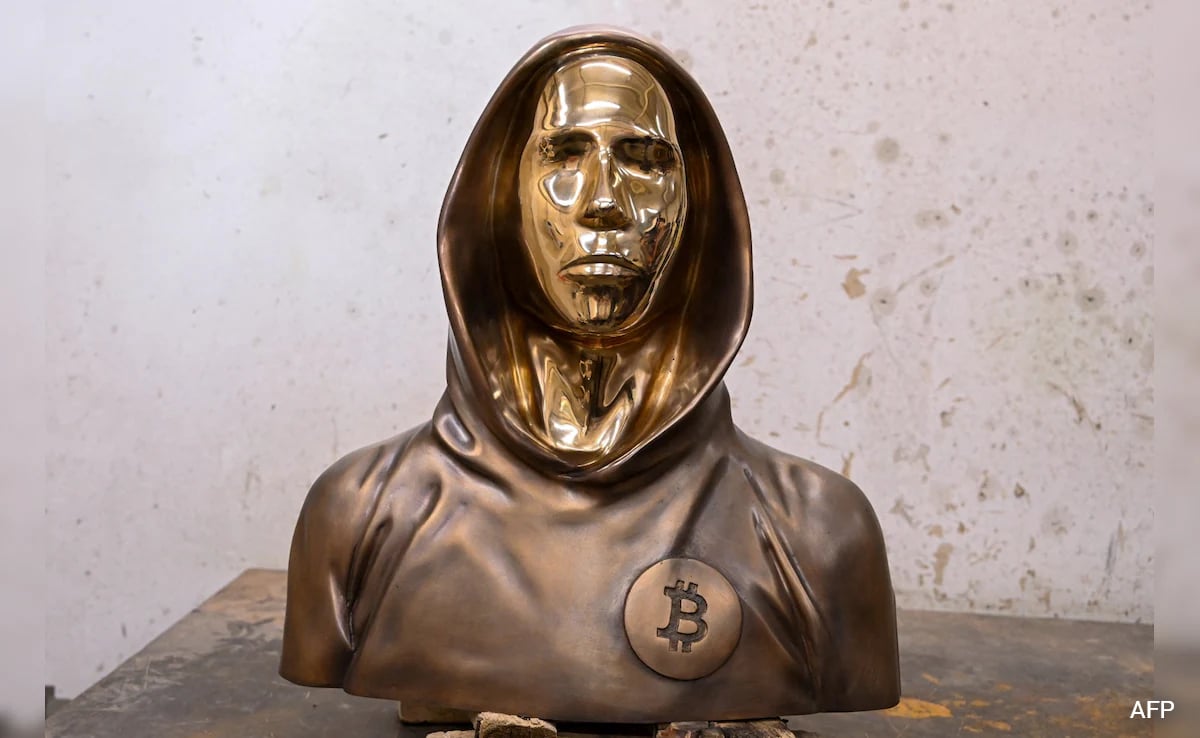
In the high-stakes theater of cryptocurrency, there is no role more coveted or dangerous than that of Satoshi Nakamoto. To claim the mantle of Bitcoin’s creator is to claim a seat at the head of a $1.3 trillion table and, theoretically, the keys to a dormant fortune of 1.1 million Bitcoin. On October 31, 2024, at the Frontline Club in London, an entrepreneur named Stephen Mollah stepped onto a stage to do exactly that.
He didn't bring a cryptographic key. He didn't move a single satoshi from the Genesis block. Instead, he brought a broken laptop and a series of "proofs" so flimsy they wouldn't pass muster in a primary school computer lab.
The Half-Million Dollar Farce
The event was billed as the "unveiling of the true legal identity of Bitcoin’s creator." For the small handful of journalists who stayed—many having paid a staggering £500 entry fee—the experience was less of a historic revelation and more of a study in audacity.
Mollah, a 58-year-old British businessman, began the proceedings not with a technical breakdown of blockchain architecture, but with a disorganized backstory. He claimed to be an "economist and monetary scientist" who had invented not just Bitcoin, but the Twitter logo, Eurobonds, and even the television show Britain’s Got Talent. When the audience, including BBC cyber correspondent Joe Tidy, pressed for technical evidence, the house of cards began to wobble.
The "proof" consisted of screenshots of BitcoinTalk forum posts from 2008 and 2009. In the world of digital forensics, a screenshot is worth nothing. It is the easiest thing in the world to manipulate a date on a web page or a local file. To prove you are Satoshi, you move the coins. It is a binary reality. You either have the private keys to the early blocks, or you are just another man on a stage.
A Legal Cloud Over the Genesis Block
Mollah’s claims are not merely an exercise in ego; they are currently the subject of criminal proceedings. Behind the bumbling press conference lies a darker narrative of alleged financial deception.
In October 2024, it was revealed that Mollah and his associate, Charles Anderson, are facing a private prosecution for fraud. The charges, brought by a private individual named Dalmit Dohil, allege that between November 2022 and October 2023, the pair "dishonestly" claimed Mollah was Satoshi Nakamoto and that he held 165,000 Bitcoin in Singapore. The intent, according to the prosecution, was to cause loss to the victim.
This context changes the London press conference from a bizarre publicity stunt into what looks like a desperate legal gambit. By doubling down on the claim in a public forum, Mollah appears to be attempting to create a "truth" by sheer repetition, despite a trial date looming in November 2025.
Why the World Keeps Falling for the Fake Satoshi
The hunt for Satoshi has become the crypto world’s version of the search for the Holy Grail, but with a multibillion-dollar bounty. Since the creator vanished in 2011, several candidates have emerged, some voluntarily and some through unwanted doxxing.
- Dorian Nakamoto: A Japanese-American physicist who shared a name but nothing else with the creator.
- Craig Wright: An Australian computer scientist who spent years in court trying to prove he was Satoshi, only for a UK High Court judge to rule definitively that he was not.
- Peter Todd: Recently "identified" by an HBO documentary, a claim Todd has vehemently and convincingly denied.
The pattern is always the same. The claimant or the investigator provides circumstantial evidence—writing styles, timestamps, or coincidental meetings. But Bitcoin is a system built on "don't trust, verify." The community's refusal to accept anything less than a cryptographic signature is the only thing preventing the network's legacy from being hijacked by whoever has the loudest microphone.
The Dead Laptop Defense
When asked at the conference why he couldn't move the coins to prove his identity on the spot, Mollah’s excuses were almost poetic in their incompetence. First, there was no power cord for the laptop. Then, there was no internet connection. Finally, he claimed his vast Bitcoin fortune was split into eight parts, stored on eight different computers across the globe—a narrative beat that felt more like a Hollywood script than a technical reality.
The problem with these excuses is that they ignore the fundamental nature of the technology Mollah claims to have built. If he were Satoshi, he would understand that a signature doesn't require a specific laptop or a global scavenger hunt. It requires a key.
The Frontline Club eventually distanced itself from the event, clarifying that they were merely a venue for hire and not an endorser of the "revelation." As the room emptied and the twitching businessman promised more evidence in the "coming months," the reality became clear.
We aren't witnessing the unmasking of a genius. We are witnessing the slow, public unraveling of an era where a person could simply claim to be someone they are not and hope the world is too confused by the technology to check the receipts. In the age of the blockchain, the truth isn't found in a London social club; it's etched into the code, and the code remains silent.