The blue metal box on the corner of 4th and Main doesn't look like a battlefield. It looks like a relic. It has a rounded top, a squeaky pull-handle, and a coat of paint that has been baked by forty summers and chipped by thirty winters. To most people passing by, it’s just a place to drop a birthday card or a utility bill. But to the United States Postal Service, that box is the frontline of a quiet, desperate war for relevance.
For years, the math didn’t work. The red ink on the USPS balance sheets wasn't just a smudge; it was a hemorrhage. We watched as the volume of first-class mail—the letters that used to be the lifeblood of the service—evaporated into the digital ether. Bills became auto-pays. Letters became DMs. The USPS was left holding the bag for a massive, nationwide infrastructure designed for a world that no longer existed. They were required by law to visit every single house, six days a week, regardless of whether they had anything to deliver but a grocery store circular.
Then came the boxes.
The shift didn't happen overnight, but it felt like it. Suddenly, the mail carrier’s bag wasn't full of envelopes; it was heavy with cardboard. The sound of the postal truck changed from the light shuffle of paper to the dull thud of a package hitting a porch. This transition brought a titan to the doorstep of the post office: Amazon.
Now, a new deal has surfaced that feels less like a contract and more like a transfusion. Amazon has committed to moving one billion packages through the USPS network. That number is so large it loses its meaning. One billion. To visualize it, imagine every man, woman, and child in the United States receiving three separate packages, and you still haven't reached the total. This isn't just a business win. It is a fundamental rewiring of how the American infrastructure survives the twenty-first century.
The Last Mile Problem
In the logistics world, they talk about the "Last Mile" with a kind of hushed reverence and terror. It is the most expensive, most difficult part of the entire supply chain. It’s easy to move a million iPhones from Shenzhen to Long Beach. It’s relatively simple to move them from a warehouse in California to a distribution center in Ohio. The nightmare begins when you have to take one single iPhone and deliver it to a farmhouse at the end of a dirt road in rural Nebraska where the nearest neighbor is five miles away.
Amazon is a master of logistics, but even they have limits. Building a delivery fleet that can reach every "last mile" in America is an expense that defies logic. But the USPS already goes there. They have been going there since the days of the Pony Express. They have the keys to the apartment complexes. They have the maps of the backroads that Google hasn't indexed yet.
By handing over a billion packages, Amazon isn't just buying a delivery service. They are renting a national heritage.
Consider a carrier named Marcus. He’s been on the same route for twelve years. He knows which dogs are barkers and which ones are biters. He knows that Mrs. Higgins at 402 needs him to leave her packages behind the planter because her knees aren't what they used to be. For Marcus, this deal means his truck is packed to the roof before he even leaves the station. It means his knees ache a little more at the end of the day. But it also means the post office in his neighborhood stays open. It means his pension has a heartbeat.
The Tension of the Handshake
This partnership is not a fairy tale. It is a marriage of necessity between two entities that couldn't be more different. On one side, you have a government-mandated service born of the Constitution, bound by strict regulations and public oversight. On the other, you have the world’s most aggressive private tech disruptor, driven by algorithms and an obsession with efficiency.
There is a friction here. Some argue that the USPS is underselling itself, that the "workshare" discounts given to massive shippers like Amazon are too steep. They worry that the post office is becoming a subsidized delivery arm for a trillion-dollar company. Others see it as the only path forward. If the USPS doesn't adapt to the e-commerce explosion, it faces a slow slide into obsolescence.
The financial lifeline is real. The influx of revenue from a billion packages provides the liquidity needed to modernize a fleet of delivery vehicles that are, in many cases, thirty years old and prone to catching fire. It allows for the sorting facility upgrades that turn a manual, grueling process into a streamlined operation. But the price of this lifeline is a total transformation of what it means to be a "postal worker."
The job is no longer about sorting mail; it is about managing weight. It’s about the physics of the "Last Mile."
The Invisible Stakes
Why should we care if the USPS survives on Amazon’s dime?
Because the post office is the only thing that connects the entire country without a profit motive as its primary filter. FedEx and UPS can choose not to service certain areas if the cost is too high. They can add surcharges for "remote" deliveries that make shipping a Christmas gift to Grandma in the mountains prohibitively expensive.
The USPS cannot.
The "Universal Service Obligation" is a promise that every American, regardless of where they live, is part of the network. If the USPS collapses, the rural-urban divide in this country doesn't just widen; it becomes a canyon. The billionaire in Manhattan and the rancher in Wyoming both pay the same price for a stamp. That is a radical, democratic idea.
When we talk about a billion packages, we are talking about the fuel that keeps that democratic idea running. We are talking about the medication delivered to veterans who can’t drive to the pharmacy. We are talking about the legal documents that must be served. We are talking about the ballots that carry the weight of a presidency.
The deal with Amazon is a stopgap, a massive, cardboard-flavored band-aid. It doesn't solve the long-term structural issues of the USPS, such as the crushing weight of pre-funded retiree health benefits or the declining volume of first-class mail. But it buys time.
The Rhythm of the Road
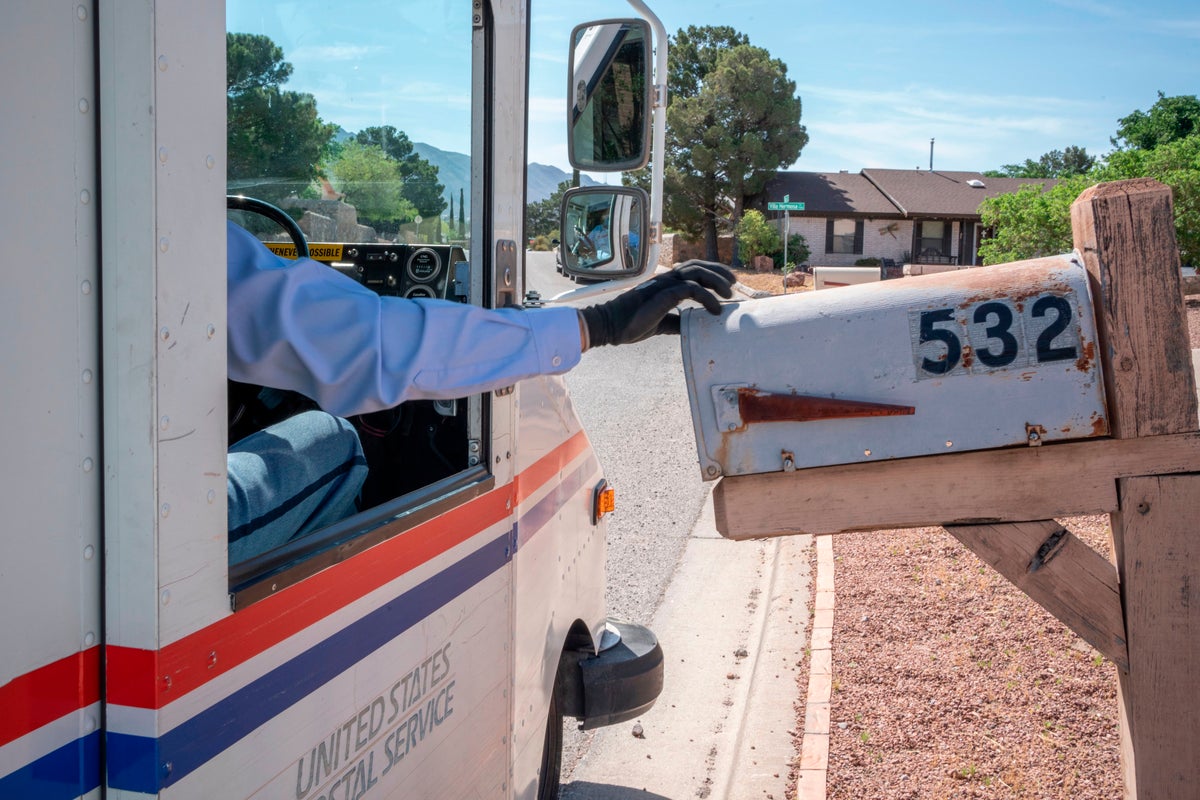
Watch the white truck with the blue and red stripe as it pulls away from the curb. The engine has a specific, wheezing growl. The driver slides the door shut with a metallic clang that echoes off the suburban houses. Inside that truck, tucked between a padded envelope from a boutique in Maine and a box of dog food from a warehouse in Kentucky, is the future of an American institution.
We have become a nation of click-and-wait. We expect the world to arrive at our door in forty-eight hours or less. We rarely think about the hands that move the boxes or the precarious balance of power required to make it happen. We don't see the spreadsheets or the frantic negotiations in D.C. boardrooms.
We just see the package.
But that package is a prayer answered for a service that was staring into the abyss. It is a billion-fold confirmation that despite our digital lives, we still live in a physical world that requires a physical connection.
The carrier climbs back into the seat, checks the mirror, and pulls back into traffic. There are three hundred more stops today. The sun is high, the coffee is cold, and the truck is heavy. But for the first time in a long time, the road ahead doesn't end at a cliff. It just keeps going, one porch at a time, across a billion different thresholds.
The blue box on the corner remains. It’s still chipped. It’s still squeaky. But as long as those trucks are moving, the box still has a reason to stand there, waiting for the next letter, even if it’s buried under a mountain of cardboard.


