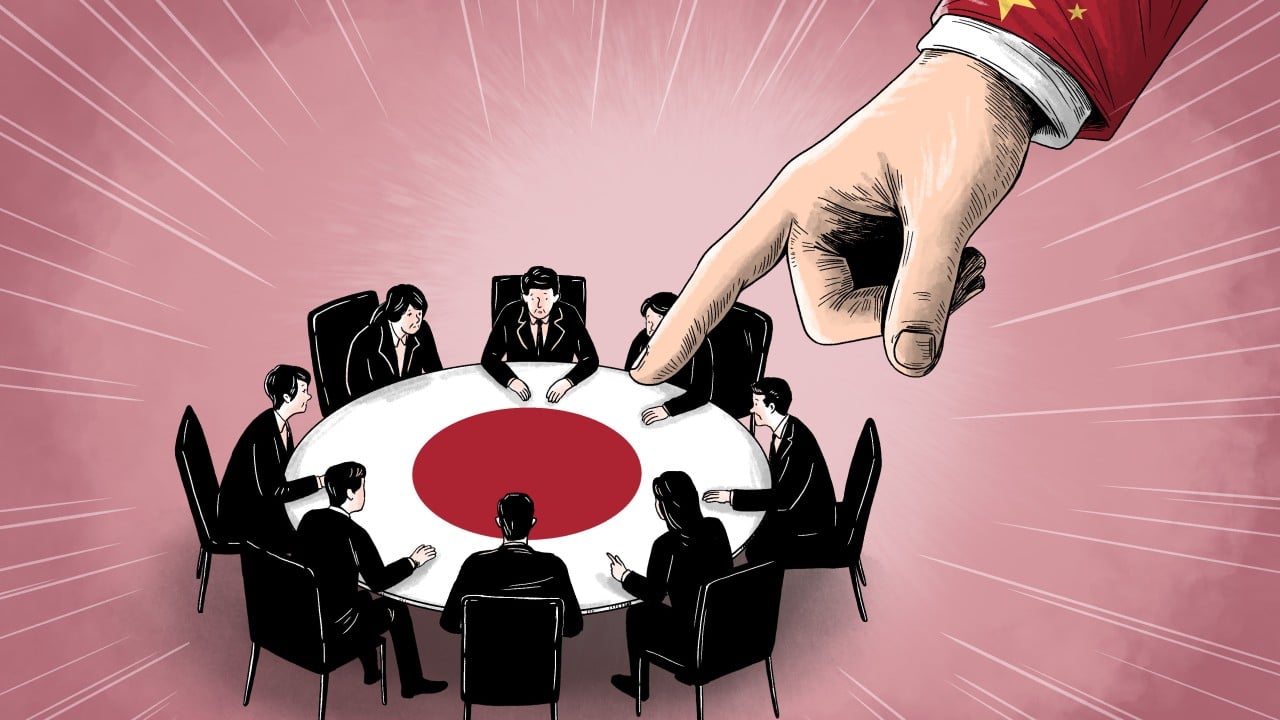
The conventional wisdom regarding Beijing’s recent diplomatic offensive against Tokyo is fundamentally flawed. Analysts at major outlets have spent months wringing their hands over Prime Minister Sanae Takaichi’s "provocative" Taiwan remarks, suggesting she "torpedoed" relations or "miscalculated" the regional mood. They argue that Beijing has "struggled" to rally Southeast Asia to its side because of Japan’s deep economic roots or a general desire for regional stability.
This is a lazy, surface-level read.
Beijing didn't "struggle" to rally Asia. It never had a chance. The failure of the CCP’s pressure campaign against Takaichi isn't a result of diplomatic friction; it’s a result of a massive, systemic shift in how Asian middle powers view the concept of "provocation." What the ivory-tower crowd calls a "diplomatic crisis" is actually the first time in decades that the regional power balance has reflected reality instead of a polite fiction.
The Myth of Strategic Ambiguity
For years, "strategic ambiguity" was the sacred cow of Indo-Pacific diplomacy. The idea was simple: if no one says exactly what they’ll do during a Taiwan contingency, no one gets angry. The competitor article treats Takaichi’s November 7 Diet statement—that an attack on Taiwan could be a "survival-threatening situation" for Japan—as a reckless break from this tradition.
I have seen diplomats spend twenty-year careers hiding behind this ambiguity while the actual security environment on the ground rotted. In the real world, ambiguity only benefits the aggressor. It allows a revisionist power to slice away at the status quo because they bet their neighbors are too scared to define a red line.
Takaichi didn’t create a crisis; she ended a lie. By explicitly linking Taiwan’s survival to Japan’s under the 2015 Legislation for Peace and Security, she provided the one thing Southeast Asian capitals actually value: predictability.
While Beijing’s envoys were busy in February 2026 trying to convince ASEAN to condemn Tokyo, the response was a deafening silence. Why? Because Manila, Hanoi, and even Jakarta have realized that a Japan that knows what it stands for is a much more reliable partner than a Japan that pretends the most obvious threat in the region doesn't exist.
Why the "Wartime History" Card Expired
Beijing’s go-to move is the "History Card." Foreign Minister Wang Yi and various state media outlets have spent the last few months shouting about Japan’s "historical culpability" and "reviving militarism." They expected this to resonate across a region that suffered under the Imperial Japanese Army eighty years ago.
It failed. Brutally.
The mistake Beijing makes—and which many Western analysts repeat—is assuming that 2026 Asia is the same as 1996 Asia. Modern Southeast Asian states are pragmatic, cold-blooded actors. They aren't looking at 1945; they are looking at 2026.
When China’s consul general in Osaka, Xue Jian, makes graphic threats against a sitting Japanese Prime Minister on social media, he isn't "defending history." He is demonstrating why every country in the South China Sea is currently terrified of Beijing’s "wolf warrior" trajectory. You cannot rally a neighborhood to join your crusade against a "militarist" neighbor when you are the one currently occupying their reefs and harrassing their fishermen.
The data supports this. While China ramped up its public criticism of Japan by over 5,000 percent in 2025, Japan’s approval ratings in Southeast Asia remained at historic highs. Trust is built on current behavior, not ancient grievances.
The Economic Coercion Paradox
There is a persistent belief that because Japan depends on China for 45 percent of its electronics components and a massive chunk of its auto parts, Beijing holds all the cards. The "Economic and Diplomatic Costs" crowd argues that Takaichi is playing with fire because China can simply shut off the tap.
This ignores the Coercion Paradox.
When Beijing banned Japanese seafood and restricted "dual-use" exports to Japanese conglomerates, they didn't induce a retreat. They accelerated the "China Plus One" strategy that was already in motion. I have spoken with C-suite executives in Tokyo who used to be the biggest advocates for the China market. Those same people are now the ones leading the charge into Vietnam, India, and the Philippines.
Beijing is currently navigating its own internal economic malaise. Every time it uses trade as a weapon against a major partner like Japan, it signals to every other investor in the region that their capital is not safe. By trying to punish Takaichi, Beijing effectively ran a multi-billion dollar advertisement for why global supply chains must bypass China.
The "Survival-Threatening" Reality
Let’s look at the mechanics of Takaichi’s stance. Critics say she overstepped by calling a Taiwan blockade an "existential crisis."
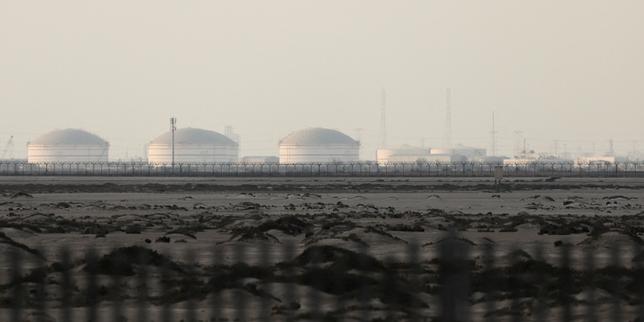
Imagine a scenario where the Bashi Channel and the Taiwan Strait are closed by a hostile naval force. Japan imports over 90 percent of its energy. A majority of those shipments pass through or near those waters. To suggest that a blockade of Taiwan is not a survival-threatening situation for Japan is a logical absurdity.
Takaichi’s "radical" departure was simply stating the laws of physics.
Beijing’s anger isn't because she was wrong; it’s because she was right. They are furious that the "logic of collective self-defense" has finally been applied to the one geography they want to keep isolated.
The Institutional Failure of the UN Narrative
Beijing has attempted to weaponize the UN Charter’s "enemy state clauses" (Articles 53, 77, and 107) to claim a legal right to take "direct military action" against Japan if it "attempts a policy of aggression."
This is a desperate, legalistic Hail Mary. These clauses are widely considered obsolete by international legal scholars and have been effectively superseded by the UN Charter’s own evolution and Japan’s admission to the UN in 1956. By even bringing these up, Beijing has shown how thin its actual diplomatic playbook has become.
When you have to cite 80-year-old administrative clauses to justify threatening a neighbor for talking about self-defense, you have already lost the argument.
The New Regional Normal
The status quo hasn't been "disrupted"—it has been updated.
The Takaichi landslide in the February 2026 elections proved that the Japanese public is not nearly as "sharply divided" as the polls suggested in 2025. When faced with external bullying, people consolidate. Beijing’s pressure didn't weaken Takaichi; it gave her a mandate.
Southeast Asia sees this. They see a Japan that is willing to take the economic hits to secure its long-term sovereignty. In a region where every country is trying to figure out how to stand up to a superpower without getting crushed, Japan just provided the blueprint.
The real story isn't why Beijing "struggled" to rally the region. The real story is that Beijing’s old tools—history, trade threats, and "strategic ambiguity"—are now officially broken.
Would you like me to analyze how this Japanese shift is specifically influencing the revised 2026 defense procurement budgets in the Philippines and Vietnam?