The United Nations Human Rights Council (UNHRC) sessions in Geneva usually feel like a marathon of bureaucratic jargon and polite disagreements. But lately, the air has changed. When Baloch activists take the floor, the room gets quiet. They aren't just reading from a script; they’re describing a region that has essentially become a "zone of silence."
If you’ve been following the news out of Pakistan, you know things are bad. But "bad" doesn't quite cover the surge in rights violations we’re seeing right now. It's not just about politics anymore. It’s about a systematic attempt to erase the social fabric of an entire province. If you found value in this piece, you should look at: this related article.
The numbers that should keep you up at night
Let’s be direct. Since the start of 2026, over 50 Baloch individuals have vanished into thin air. That sounds like a small number until you realize it's part of a much larger, darker trend. In 2025 alone, human rights groups documented over 1,200 enforced disappearances.
Think about that. 1,200 people. For another look on this story, check out the latest update from NBC News.
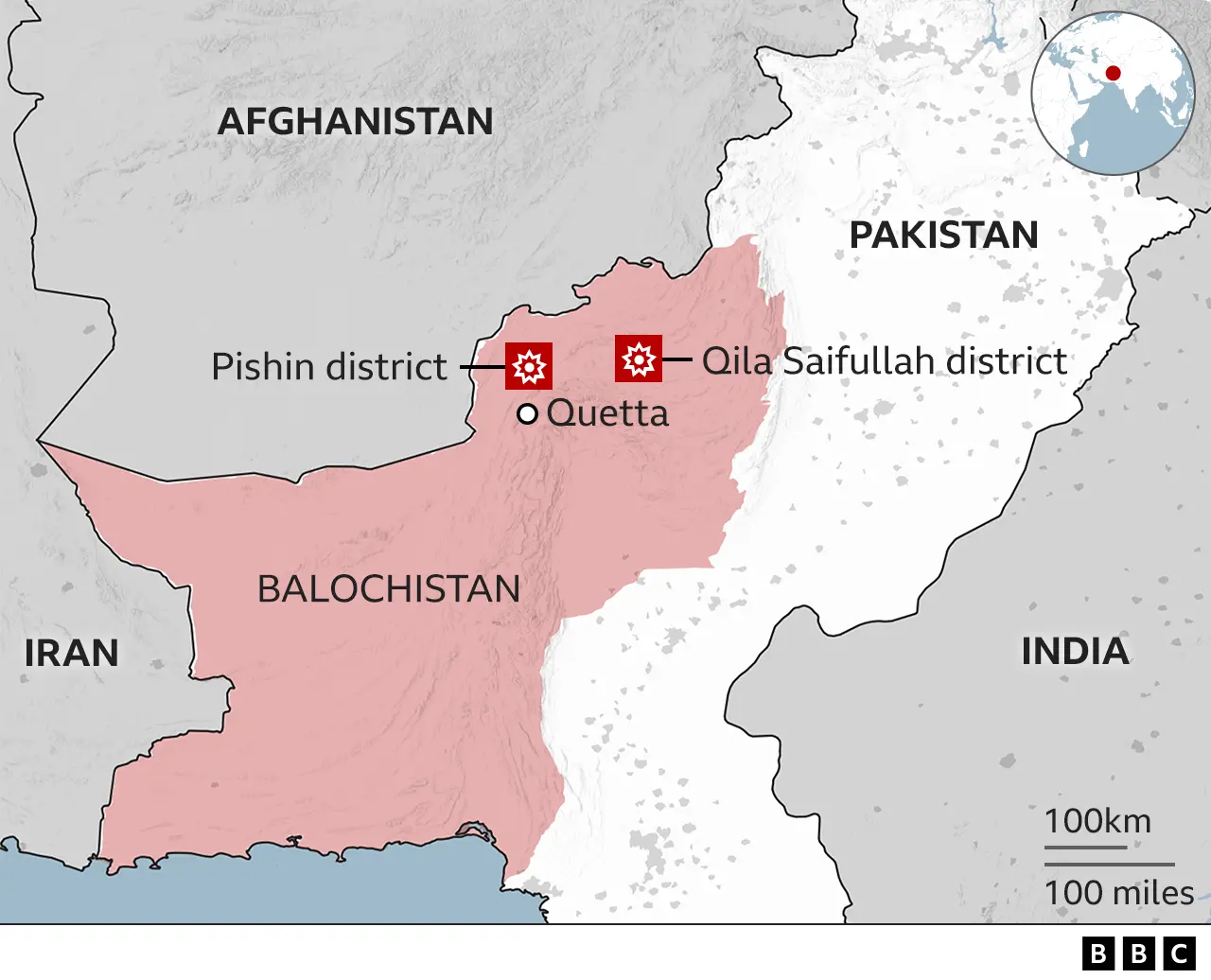
That’s 1,200 families waiting for a phone call that never comes. That’s 1,200 empty chairs at dinner tables in Quetta, Gwadar, and Turbat. The Baloch Yakjehti Committee (BYC) recently reported that nearly 550 of those people are still missing. We aren't talking about "detentions" where you get a lawyer and a court date. We’re talking about people being picked up from their homes or university campuses and never being seen again.
Why the UNHRC is finally listening
For years, Pakistan has dismissed these allegations as "foreign-funded propaganda." But the evidence presented in Geneva this year is harder to ignore. Activists like Mahrang Baloch, who recently spent time in solitary confinement, have brought a new level of visibility to the cause.
When a woman who has spent her life searching for her disappeared father stands in front of international diplomats, the narrative shifts. You can't just call her a "militant" and walk away. Her story—and the stories of thousands of others—paints a picture of a state that has lost its way.
The UNHRC 61st session saw something different. It wasn't just a few speeches. There were photo exhibitions at the Broken Chair Monument. There were specific, documented cases of "kill-and-dump" operations. For those unfamiliar, that's exactly what it sounds like: a person is abducted, killed, and their body is left in a remote area to send a message to the community.
The weaponization of the legal system
It’s easy to blame "rogue elements" in the military. But the real problem is deeper. It’s the way the entire legal system has been weaponized.
When families try to identify the bodies of their loved ones, they’re met with batons and tear gas. We saw this in March 2025 at the Quetta Civil Hospital. Police attacked families who were just trying to see if their sons were among the victims of a recent incident.
- Collective punishment: If one person is suspected of dissent, their entire family becomes a target.
- Targeted killings of intellectuals: It isn't just "rebels." It’s professors, students, and writers.
- Impunity: Not a single high-ranking official has been held accountable for these disappearances.
Honestly, it’s a miracle the Baloch people are still protesting at all. Most people would have been crushed by this kind of pressure. Instead, the protests are spreading to Karachi and even into Europe.
The China factor in Balochistan
You can’t talk about Balochistan without talking about the money. Specifically, Chinese money. The China-Pakistan Economic Corridor (CPEC) is the elephant in the room.
The Pakistani state sees Balochistan as a treasure chest of minerals and a strategic coastline. The people living there see it as their home. When the state prioritizes a "five-part peace plan" or a new port over the basic safety of its citizens, you get a recipe for disaster.
The surge in violations is directly tied to "securing" these economic interests. If a village is in the way of a new road, the people are moved. If they protest, they disappear. It’s a brutal, transactional approach to governance that treats human lives as obstacles to be cleared.
What happens when the world looks away
The danger here is "activism fatigue." We hear about rights violations so often that we start to tune them out. But the Baloch situation is a central moral test for the international community.
If the UNHRC allows a member state to systematically disappear its own people with zero consequences, what’s the point of the Council? Pakistan has been called out by the Committee on Enforced Disappearances and the Committee against Torture. The reports are there. The data is clear.
What’s missing is action.
Where do we go from here
If you care about human rights, don't just read this and move on. The "zone of silence" only works if we stay quiet too.
- Support grassroots documentation: Groups like the Baloch Yakjehti Committee (BYC) are doing the dangerous work of counting the missing. Follow their reports.
- Demand transparency in aid: International aid shouldn't be a blank check for a military that uses it to suppress its own population.
- Amplify Baloch voices: Don't let the state-run narrative be the only one people hear.
The fight for Baloch rights isn't just a regional issue. It’s a fight for the idea that a person’s life has value, regardless of their ethnicity or their politics. No home in Balochistan is safe right now. That should matter to all of us.