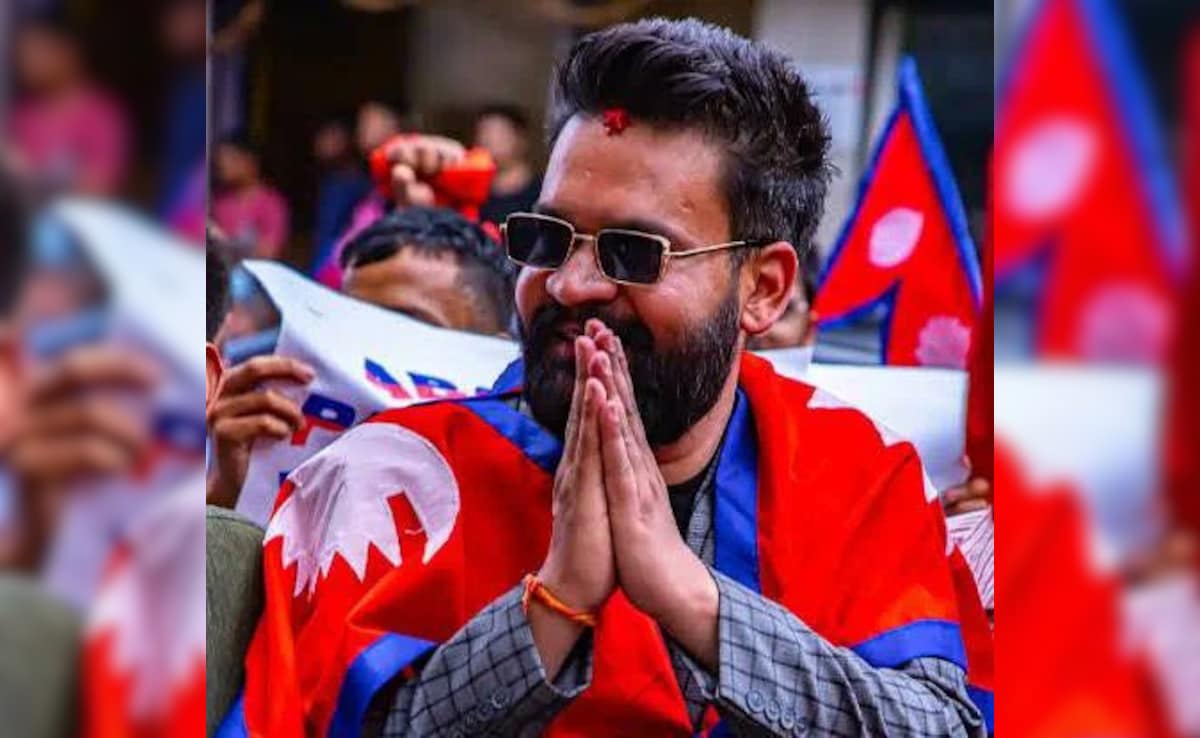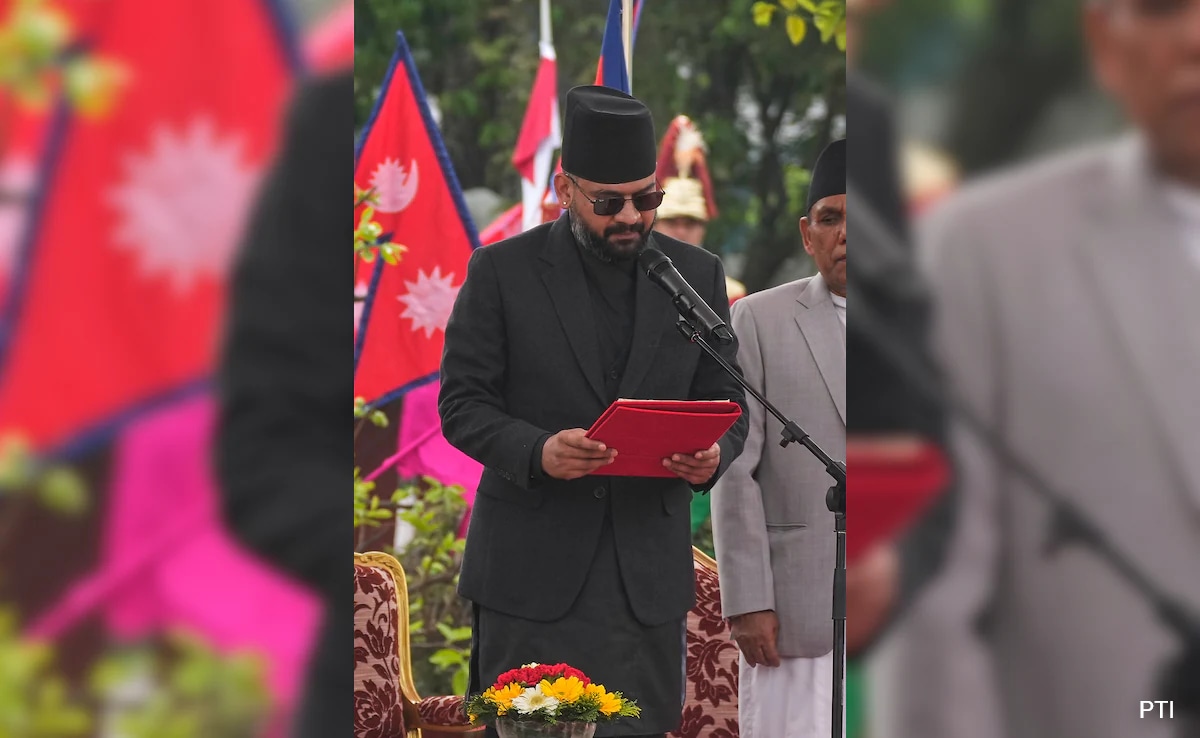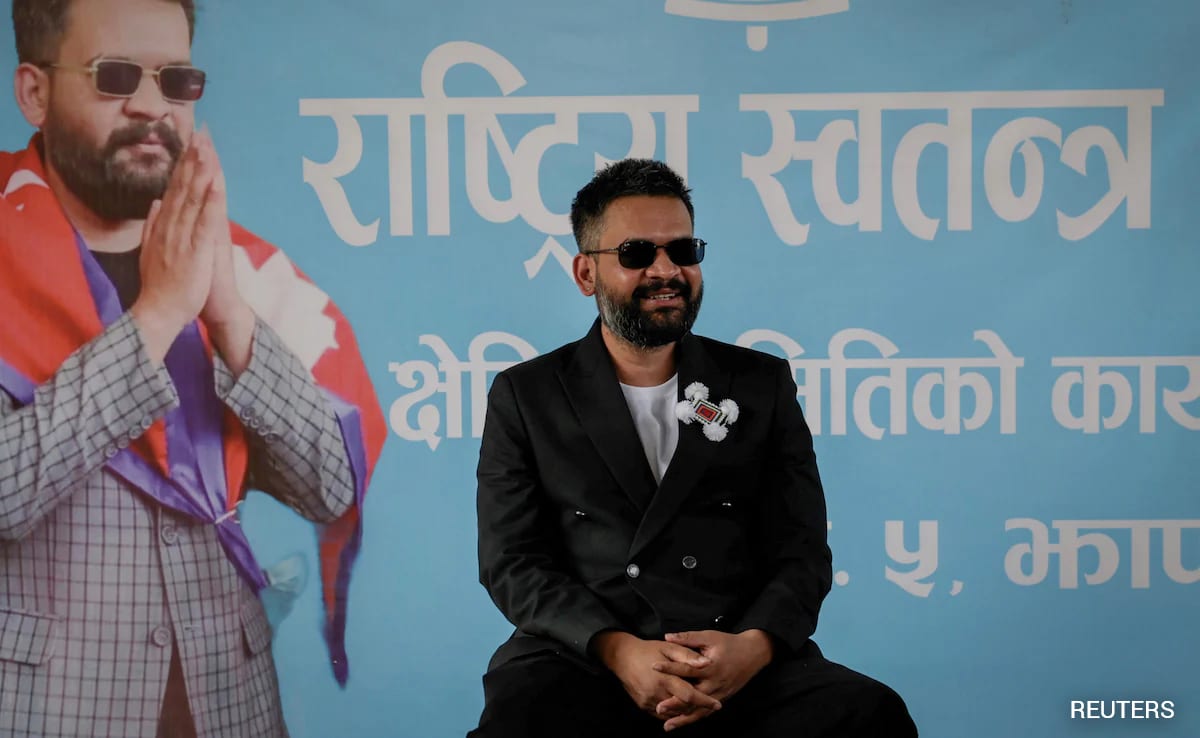
Balen Shah has officially taken the oath of office as Nepal’s youngest Prime Minister at 35, marking a tectonic shift in a Himalayan nation long defined by a geriatric political monopoly. His landslide victory is not just a win for an independent-turned-party leader; it is a brutal eviction notice served to the three-party syndicate that has traded the premiership like a family heirloom for thirty years. Shah’s rise from a structural engineer and rapper to the most powerful man in Kathmandu suggests that the era of patronage-based politics has finally hit a wall of digital-age accountability.
The machinery of the state is now in the hands of a man who campaigned on urban planning, budget transparency, and the aggressive removal of illegal encroachments. To understand how a 35-year-old bypassed the seasoned veterans of the Nepali Congress and the CPN-UML, one must look past the charisma and focus on the data. Shah didn't just win a vote; he engineered a demographic coup. If you enjoyed this piece, you might want to look at: this related article.
The End of the Syndicate
For decades, Nepal’s political theater was a predictable rotation between Sher Bahadur Deuba, K.P. Sharma Oli, and Pushpa Kamal Dahal. These men operated on a system of "bhagbanda," a Nepali term for the tactical sharing of state resources and appointments to keep the peace between rival factions. This system ensured stability for the elites while the country’s infrastructure crumbled and its youth fled to the Gulf states for manual labor.
Shah’s entry broke this cycle by ignoring the traditional power brokers entirely. While the old guard relied on grassroots cadres and local muscle, Shah utilized a sophisticated social media operation that functioned like a modern corporate marketing department. He bypassed the state-run media and the party-aligned newspapers, speaking directly to a disillusioned electorate through platforms where the old leaders appeared like relics. For another perspective on this development, check out the recent update from The Washington Post.
The scale of his victory indicates a massive migration of "silent voters"—those who previously stayed home out of apathy or disgust. In the streets of Kathmandu and beyond, the sentiment is clear: the public is no longer afraid of the party machinery. They have seen that a candidate without a hereditary political pedigree can not only run but can also dismantle the established order.
Engineering the Prime Minister’s Office
Shah is a structural engineer by trade. This isn't a minor biographical detail; it is the core of his governance philosophy. Where previous Prime Ministers spoke in the abstract language of "revolution" or "stability," Shah speaks in the language of logistics, drainage, waste management, and seismic resilience.
The Technocratic Threat
The traditional bureaucracy, often referred to as the "permanent government," is currently in a state of quiet panic. Under the old system, ministerial positions were rewards for loyalty. Shah has signaled that he intends to treat the cabinet more like a board of directors. He is looking for KPIs, not political favors.
- Infrastructure Audits: Shah has promised a forensic look at the last decade of public works projects, many of which are years behind schedule.
- Foreign Investment Reform: He aims to strip away the layers of "middlemen" that have historically discouraged international developers from entering the Nepali market.
- Transparency Protocols: Every rupee of the national budget is slated to be trackable via a digital dashboard, a move that strikes at the heart of the shadow economy.
This technocratic approach is his greatest strength, but it also paints a target on his back. The bureaucracy knows how to slow-walk reforms until a leader loses momentum. Shah will have to prove he can navigate the labyrinth of the Singha Durbar without becoming another cog in its rusty gears.
Geopolitical Tightropes and Cold Realities
Nepal sits in the unenviable position of being a "yam between two boulders," squeezed between India and China. Historically, Nepali Prime Ministers have used this tension to extract aid, often playing one neighbor against the other. However, Shah’s "Nepal First" rhetoric is more than just a campaign slogan; it is a shift toward a more transactional foreign policy.
New Delhi and Beijing are both watching him with a mixture of curiosity and caution. He is the first leader in a generation who does not owe his rise to the backing of either neighbor. This independence gives him a rare mandate, but it also means he lacks the traditional backchannels that have historically smoothed over diplomatic friction.
The stakes are high. Nepal’s economy is heavily dependent on imports and remittances. Any disruption in the supply chains from the south or the investment flows from the north could derail his domestic agenda before the first 100 days are up. Shah’s challenge is to maintain sovereignty without descending into isolationism, a balance that has eluded far more experienced diplomats.
The Youth Exodus Crisis
Perhaps the most pressing issue on Shah’s desk is the flight of human capital. Every day, thousands of young Nepalis board flights at Tribhuvan International Airport, bound for low-paying, dangerous jobs in Qatar, Malaysia, and the UAE. This is not just a labor issue; it is a national existential crisis.
The remittance money keeps the economy afloat, but it leaves the country hollowed out. Shah’s victory was fueled by the families of these migrants who want their children to have a future at home. His plan involves creating a "Special Economic Zone" for tech and manufacturing that bypasses the usual red tape.
Challenges to Domestic Job Creation
- Energy Reliability: Despite vast hydropower potential, industrial power remains inconsistent and expensive.
- Credit Access: Small and medium enterprises (SMEs) struggle with high interest rates and collateral requirements that favor the landed elite.
- Education Mismatch: The current university system produces graduates with degrees that don't align with the needs of a 21st-century economy.
Shah has proposed a vocational overhaul, shifting the focus from general arts degrees to technical certifications. It is an ambitious, necessary, and incredibly difficult task in a country where the education system is a prime source of political patronage.
Dealing With the "Deep State"
In Nepal, the "Deep State" isn't a shadowy conspiracy; it’s a visible network of business tycoons, high-ranking military officials, and veteran party leaders who control the levers of the economy. They own the banks, the private schools, and the construction firms. They have survived every political upheaval since the end of the monarchy in 2008.
Shah’s landslide win gives him the popular mandate to challenge these monopolies, but popularity is a fragile currency. The old guard is already regrouping. They are betting that Shah’s lack of a parliamentary majority—if he fails to hold his coalition together—will turn him into a "lame duck" Prime Minister.
He will be forced to make deals. The question is whether he can compromise on the "how" without selling out the "why." If he allows the old brokers back into the decision-making process, his base will see it as a betrayal. If he refuses to budge, he risks a total legislative stalemate that could paralyze the country.
The Accountability Trap
The hype surrounding Balen Shah is currently at an all-time high. In the tea shops of Pokhara and the boardrooms of Kathmandu, he is being discussed as a messiah. This is the "Accountability Trap." When you promise to fix everything, every minor failure is magnified.
A single delayed project, a minor corruption scandal within his party, or a failure to control inflation could turn the tide of public opinion. Shah has spent his career being the outsider throwing stones at the building. Now, he is inside the building, and the windows are made of glass.
He has already started his term with a series of high-profile "cleaning" operations, both literal and metaphorical. He is using his platform to shame non-performing contractors and local officials. It makes for great social media content, but the transition from a "populist disruptor" to a "stable administrator" is the hardest move in politics.
The Digital Governance Blueprint
Shah’s team is reportedly working on a "National Operating System," a suite of digital tools designed to eliminate the need for physical interaction with government offices. In Nepal, "files" (tippanis) often go missing when a bribe isn't paid. By digitizing the workflow, Shah hopes to make corruption technically impossible, or at least highly visible.
This isn't just about efficiency; it's about dignity. For the average Nepali, dealing with the government has long been a humiliating exercise in supplication. Shah wants to change the citizen-state relationship from one of "subject and ruler" to "customer and service provider."
If he succeeds, he won't just be the youngest Prime Minister in Nepal’s history; he will be the architect of a new type of South Asian democracy. One that is less about slogans and more about delivery.
Why the Landslide Matters Now
The timing of this win is critical. Nepal is at a crossroads. The transition to federalism has been expensive and messy. Local governments are often at odds with the federal center. Shah, having served as the Mayor of Kathmandu before this ascent, understands the friction between local needs and national policy better than anyone in the previous administration.
He is uniquely positioned to bridge the gap between the provinces and the capital. However, he must resist the urge to centralize power. The temptation for a young, popular leader to bypass the "inefficiency" of federalism is strong, but it is a path that leads toward the very authoritarianism Nepal worked so hard to dismantle.
The landslide win provides a window of opportunity that will likely last eighteen to twenty-four months. During this period, the old parties will be too shocked and disorganized to offer effective resistance. This is the "Golden Hour" of his premiership. Every day spent on ceremonial duties instead of structural reform is a day wasted.
The Burden of the Crown
Shah’s inauguration was notably devoid of the usual pomp. He seems aware that the clock is ticking. The 35-year-old engineer has inherited a country with a broken heart and a drained wallet. He is the first leader of the "post-civil war" generation to hold real power, and his success or failure will determine if Nepal remains a "failing state" or becomes a regional success story.
The streets are currently quiet, filled with a cautious hope that hasn't been felt since the 1990s. But in the corridors of power, the knives are being sharpened. The veterans of the old guard are not going away; they are simply waiting for the young man to make a mistake.
Shah’s greatest asset isn't his youth or his fame; it is his understanding that the old ways of doing business are physically and economically unsustainable. He doesn't just want to lead Nepal; he wants to rebuild it from the foundation up. Whether the "boulders" on either side and the "wolves" within will let him is the only question that matters now.
Monitor the upcoming legislative session for the first draft of the "National Digital Integrity Act." This will be the clearest indicator of whether Shah intends to actually dismantle the patronage networks or if he is simply installing a new, younger version of the same system.
Immediate Action Items for the New Administration
- Audit of the Top 50 Infrastructure Projects: Immediate cancellation of contracts for firms that have missed more than three deadlines.
- Central Bank Autonomy: A public pledge to refrain from political interference in monetary policy to stabilize the Rupee.
- Youth Entrepreneurship Fund: Moving the remittance tax directly into a low-interest loan pool for returning migrants.
The era of the "Old Kings" is over, but the republic they left behind is fragile. Balen Shah has the keys; now the world waits to see if he knows how to drive.
The first test of his leadership will be the upcoming budget cycle, where he must choose between populist spending to keep his base happy or the painful, structural cuts required to save the national treasury from a debt spiral. Watch the finance ministry appointments closely. If he chooses a career technocrat over a political ally, we will know he is serious about the "engineer's approach" to governance.