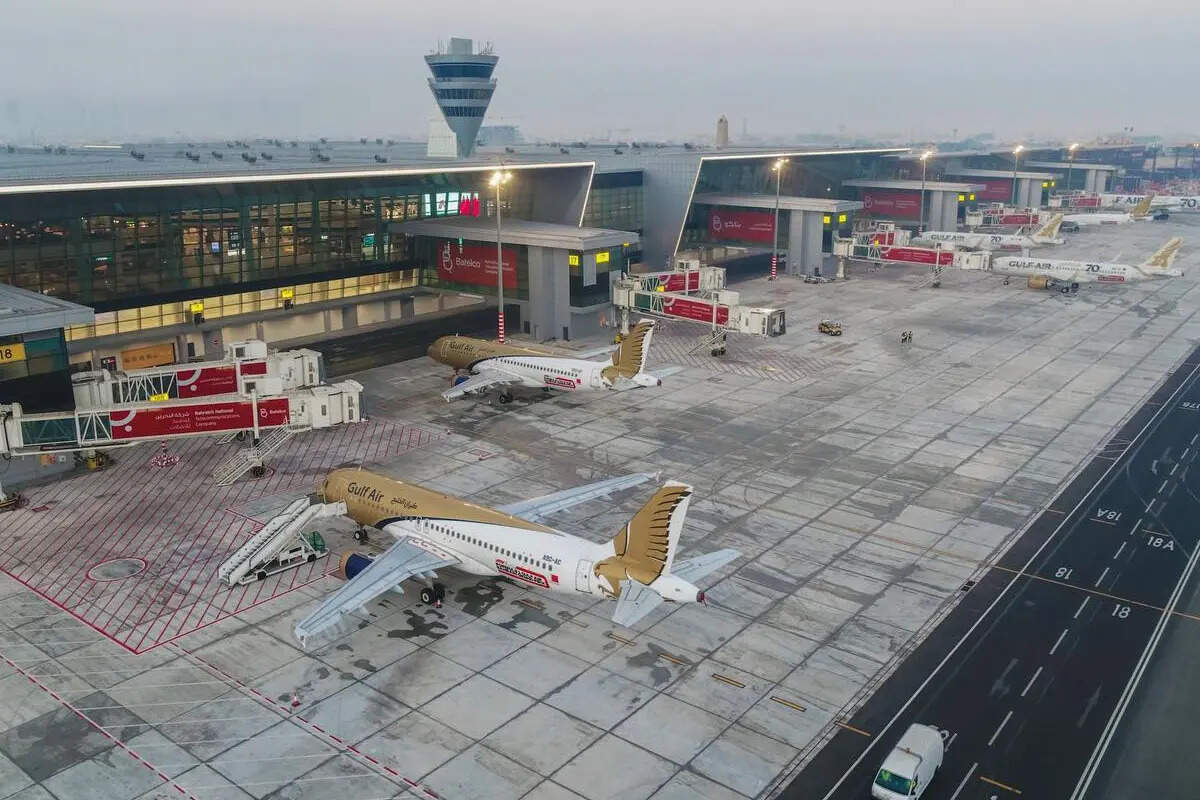
Bahrain International Airport has officially reopened its runways, ending a tense period of silence that saw the kingdom’s primary gateway to the world paralyzed. While flight schedules to London, Mumbai, and Dubai are slowly regaining their rhythm, the resumption of service is a superficial fix for a much deeper wound in Gulf aviation. The immediate backlog of thousands of stranded passengers is being cleared, but the economic tremors of the sudden airspace closure are still vibrating through the regional supply chain.
The shutdown was not merely an inconvenience for holidaymakers. It was a stress test for a region that has gambled its entire economic future on being the world’s indispensable transit hub. When Bahrain goes dark, the friction is felt instantly in the boardroom of every major carrier from Gulf Air to Emirates.
The Fragility Of The Middle Eastern Hub Model
For twenty years, the Gulf states have sold the world a vision of a frictionless "global crossroads." They built massive terminals, bought record-breaking fleets of wide-body jets, and promised that any two points on the globe were only one connection away. This model relies on one thing above all else: predictable, open skies.
The recent closure exposed how thin that veneer of stability actually is. Unlike Europe, where a groundings in one country can often be mitigated by a dense network of high-speed rail and alternative hubs, the Gulf has no Plan B. There is no trans-continental railway to move 50,000 people from Manama to Riyadh overnight. When the airspace closes, the system doesn’t just slow down. It breaks.
Logistics managers are now staring at the "just-in-time" delivery failures that occurred during the brief blackout. High-value electronics, perishable pharmaceuticals, and time-sensitive diplomatic cargo were diverted to secondary airports in Oman or left idling on tarmac in the heat. These are the hidden costs of a centralized hub system that prioritizes scale over redundancy.
The Ripple Effect Across The Indian Subcontinent
Bahrain serves as a vital artery for the millions of expatriate workers traveling between the Gulf and India. The closure didn't just delay flights; it caused a massive spike in "shadow pricing" where last-minute tickets on remaining routes surged by 300% within hours.
For the average laborer or mid-level manager, a 48-hour delay is not a minor hurdle. It is a potential breach of contract or a missed family emergency. The airlines often frame these events as force majeure, shielding themselves from liability, but the reputational damage to the "Manama-Mumbai" corridor is significant. Travelers are beginning to look at direct flights or more stable transit points, even if they cost more upfront.
Security Protocols And The Communication Void
One of the most damning aspects of the recent crisis was the lack of real-time data provided to the public and industry partners. While the airport has reopened, the specific technical or security triggers that led to the sudden grounding remain shrouded in bureaucratic vagueness.
In modern aviation, silence is the enemy of safety. When an airspace closes without a clear, immediate explanation, it triggers a chain reaction of risk assessments by international insurers. If Bahrain wants to maintain its status as a premier logistics hub, it cannot afford to treat operational disruptions as state secrets. Transparency is the only currency that matters to the global aviation community.
We are seeing a trend where regional tensions or technical glitches lead to "precautionary" shutdowns. While "safety first" is the mantra, the lack of a standardized regional protocol for these events means that every country reacts in a vacuum. This creates a patchwork of closed corridors that pilots must navigate like a minefield, increasing fuel burn and pilot fatigue.
Why Reopening Is Not Recovery
The planes are in the air, but the balance sheets are in the red. A single day of total closure at a hub like Bahrain can cost the national carrier and the airport authority tens of millions of dollars in lost landing fees, refueling charges, and retail revenue.
More importantly, the trust of the "premium" traveler—the business class passenger who pays the bills—has been shaken. These travelers prioritize reliability above all else. If they suspect a hub is prone to sudden, unexplained closures, they will simply re-route through Istanbul or Doha. Bahrain is now in a race to prove that this was a freak occurrence rather than a symptom of a systemic instability.
The Hidden Cost Of Grounded Cargo
While passengers vent on social media, the real damage is happening in the belly of the planes. Air cargo accounts for a staggering percentage of the profit margins for Middle Eastern carriers. When Bahrain closed, the regional "sea-to-air" bridge was severed.
Goods arriving by ship at the Port of Khalifa Bin Salman, intended to be whisked away by air to Europe, sat in warehouses. This delay creates a backlog that takes weeks to clear. In the world of high-velocity logistics, a two-day delay is an eternity. It forces manufacturers to rethink their reliance on Gulf transshipment points, potentially looking toward emerging routes in Central Asia or more stable corridors in the Mediterranean.
The Competitive Threat From Riyadh
Bahrain is also operating in a new, hyper-competitive environment. With Saudi Arabia's massive investment in Riyadh Air and the expansion of its own aviation infrastructure, Manama no longer has a monopoly on being the "friendly" gateway to the northern Gulf.
If Saudi Arabia can offer a more resilient airspace management system, they will cannibalize Bahrain’s market share with ruthless efficiency. The reopening of Bahrain's airport isn't just about getting back to normal; it’s about defending a territory that is increasingly under siege from better-funded neighbors.
Technical Debt And Infrastructure Limits
There is a whispered conversation among industry analysts regarding the aging infrastructure of regional air traffic control (ATC) systems. As traffic volume grows, the technical demands on ATC become exponentially more complex.
Was the shutdown a result of an inability to handle a surge in traffic, or perhaps a vulnerability in the digital systems that govern the skies? Until the authorities provide a full post-mortem, the industry will continue to speculate. The move toward "Single Sky" initiatives—similar to those attempted in Europe—has stalled in the Gulf due to geopolitical friction. Without a unified approach to airspace management, these "random" closures will become more frequent, not less.
The Strategy Of Silence Must End
Aviation is built on data. Flight paths are optimized by algorithms, and maintenance is predicted by sensors. Yet, the human element of aviation management in the region remains stubbornly opaque.
To survive the next decade, Bahrain needs to do more than just fix its runways. It needs to lead the way in regional coordination. This means establishing a cross-border crisis management task force that can handle airspace disruptions without total grounding. It means investing in secondary "relief" airports that can handle diverted traffic without the chaos we saw last week.
The aviation industry is currently watching Bahrain very closely. They aren't looking at the flight boards; they are looking at the policy changes. If the kingdom continues to rely on the "business as usual" approach, they are inviting the next crisis to be even more devastating.
The true test of a hub is not how it operates on a sunny day, but how it recovers when the screens go red. Bahrain’s reopening is a tactical success, but a strategic warning. The regional aviation industry is running on a high-wire, and the safety net is currently being held together by nothing more than hope and luck.
Investors and airlines should be demanding a transparent audit of the closure. Without a clear understanding of the failure points, the reopening of the airport is simply a countdown to the next shutdown. Every hour the airport remained closed was a lesson in the fragility of modern connectivity, a lesson that the Gulf states would be wise to study before the next "unforeseen" event wipes out a week of GDP.
Stop looking at the arrival gates and start looking at the regional ATC cooperation agreements. That is where the real story of Bahrain's future will be written.