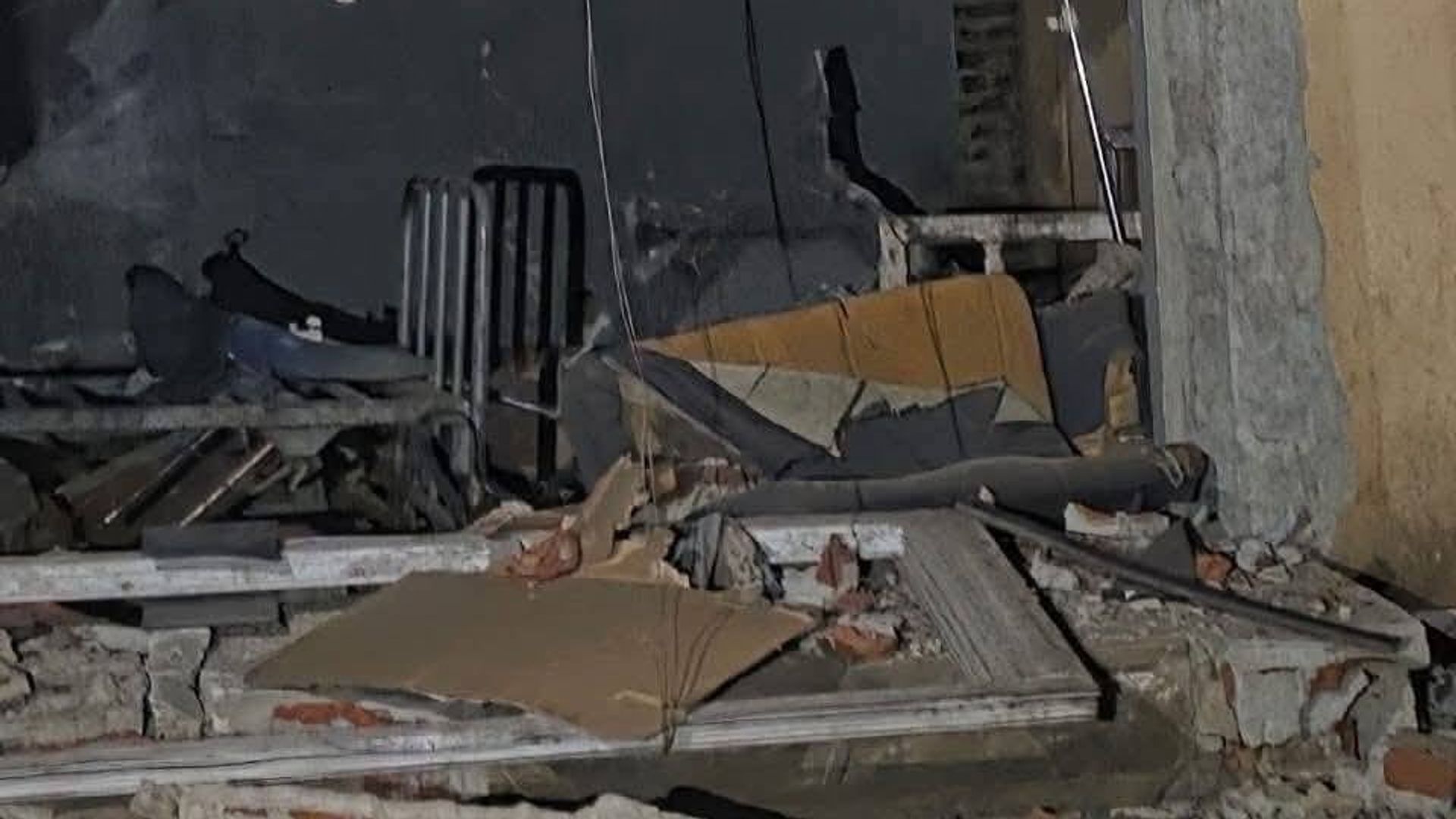
The kinetic strike on Al Nao Hospital in Omdurman, resulting in 64 fatalities including 13 children, represents more than a localized humanitarian catastrophe; it signals the total collapse of protected "safe zones" within the Sudanese conflict’s operational theater. When medical infrastructure shifts from a neutral utility to a high-value target or a collateral byproduct of indiscriminate urban shelling, the systemic cost-function of the conflict shifts. This event provides a data point for analyzing the degradation of the Sudanese healthcare ecosystem and the strategic vacuum created by the absence of enforced deconfliction protocols.
The Triad of Medical System Collapse
The destruction of Al Nao Hospital can be deconstructed through three distinct operational failures that characterize the current phase of the Sudanese civil war.
- The Neutrality Deficit: In high-intensity urban warfare, the physical footprint of a hospital—often the only electrified, high-resource structure remaining in a district—becomes a magnet for military positioning or, conversely, a landmark for heavy artillery ranging. The Al Nao incident demonstrates that the symbolic protection of the Red Cross or Red Crescent emblems has reached a point of zero-utility in Omdurman.
- Resource Compression: With each facility neutralized, the remaining operational units face exponential surges in patient volume. This creates a "bottleneck of mortality" where the cause of death is not the initial injury, but the logistical inability to triage and treat within the "golden hour."
- Personnel Attrition: The death of 64 individuals, including specialized pediatric cases, effectively ends the career-path of medical professionals in that sector. Fear of targeted strikes leads to an exodus of skilled labor, transforming a temporary facility closure into a permanent regional medical vacuum.
The Mechanics of Indiscriminate Urban Targeting
To understand the 64-fatality count, one must look at the density of urban population centers in Sudan and the specific munitions used. Reports indicate the use of heavy artillery and explosive projectiles in residential zones.
The physics of an explosive strike within a hospital environment differs from open-field combat. Shrapnel interaction with pressurized oxygen tanks, chemical stores, and concrete reinforcement creates secondary and tertiary casualty mechanisms. In the case of Al Nao, the presence of children—likely in the pediatric or outpatient wings—suggests the strike occurred during peak operational hours, maximizing the lethality of the event.
The probability of such high casualty counts increases when "area-effect" weapons are used in place of precision-guided munitions. This suggests a shift from tactical engagement to a strategy of territorial denial, where the goal is to make a specific neighborhood uninhabitable by destroying the infrastructure necessary for life.
Economic and Demographic Cascades
The loss of 13 children in a single event is a demographic shock that reverberates through the local socio-economic fabric. Beyond the immediate grief, these losses represent a depletion of future human capital in a nation already suffering from a "brain drain."
- The Healthcare Inflation Spiral: As private and public hospitals are destroyed, the cost of remaining black-market or clandestine medical care sky-rockets.
- Internal Displacement Vectors: The destruction of Al Nao forces thousands of residents to migrate toward the borders or toward Port Sudan. This mass movement creates a secondary crisis of sanitation and infectious disease in transit camps.
- The Insurance Paradox: In a conflict where hospitals are active targets, international aid organizations face impossible insurance and risk-management hurdles, leading to a withdrawal of external funding and specialized surgical teams.
The Failure of Deconfliction Mechanisms
International humanitarian law relies on the principle of "distinction"—the requirement to distinguish between combatants and civilians. The Al Nao strike proves the structural failure of current deconfliction channels, which typically involve sharing GPS coordinates of medical facilities with warring parties.
There are two primary hypotheses for why these channels failed:
- The Communication Gap: Command-and-control structures within the paramilitary and state forces have fractured to the point where coordinate data provided at the leadership level does not reach the battery commanders on the ground.
- Active Target Acquisition: The hospital was intentionally targeted to degrade the morale of the local population or to eliminate a perceived logistical advantage of the opposing side.
The second hypothesis is supported by the recurring nature of strikes on medical facilities in the Khartoum-Omdurman-Bahri tri-city area. If a facility is hit once, it may be an error. If 64 people are killed in a sustained or high-caliber strike on a known medical landmark, it is a policy.
Quantifying the Humanitarian Gap
Standard metrics for conflict often focus on "boots on the ground" or "territory held." A more accurate measure of a conflict's long-term damage is the "Hospital Bed per 1,000" (HBPK) metric. Before the current escalation, Sudan’s HBPK was already below global averages. The Al Nao strike removes dozens of beds and critical trauma bays from the ledger.
When a hospital of this scale is hit, the regional mortality rate for non-conflict-related issues (maternal mortality, dialysis failure, chronic disease) rises by an estimated 20-30% within the following quarter. The 64 immediate deaths are the "visible" data; the "invisible" data is the thousands of residents who will now die of manageable conditions because their primary node of care has been liquidated.
Strategic Play: The Intervention Requirement
The only logical path to preventing the total eradication of the Sudanese medical system is the establishment of "Non-Kinetic Corridors" enforced by international monitoring. Relying on the "goodwill" of combatants who have already demonstrated a disregard for the sanctity of medical space is a failed strategy.
Future engagement must prioritize:
- Hardened Medical Infrastructure: Transitioning from centralized hospitals like Al Nao to decentralized, mobile, and subterranean surgical units that are harder to target with traditional artillery.
- Satellite-Based Accountability: Utilizing high-resolution commercial satellite imagery to provide real-time evidence of the origin of fire for hospital strikes, creating a basis for future international criminal proceedings.
- Tele-Medicine Nodes: Scaling remote diagnostic capabilities to reduce the number of people physically required to be in a high-target building at any given time.
The Al Nao tragedy is a bellwether. If the international community treats it as an isolated incident of "collateral damage" rather than a systematic destruction of the urban survival framework, the remaining medical infrastructure in Sudan will be systematically dismantled by the end of the fiscal year.