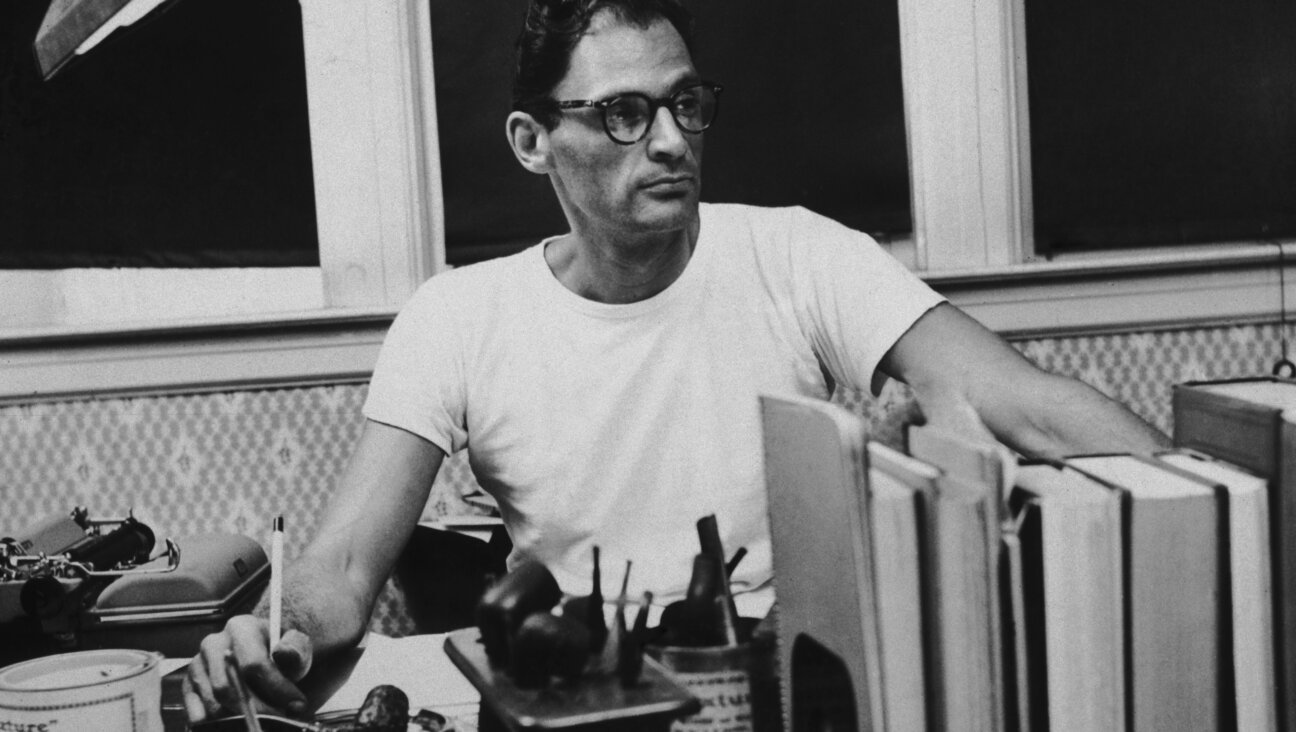
Arthur Miller isn’t supposed to be a museum piece. When he wrote his most biting scripts, he was aiming for the throat of American complacency. But lately, seeing Miller on stage feels like a coin toss. You either get a production that feels like a live wire or one that feels like a dusty history lecture. I’ve watched enough revivals to know that the difference isn’t just about the acting. It’s about whether the director understands that Miller’s world of "common men" and "moral debts" can’t survive if it’s wrapped in plastic.
The current theatrical season has given us a strange duality. We’re seeing two distinct Miller heavyweights—Death of a Salesman and The Price—mounted in ways that show exactly why some classics breathe while others suffocate. One production manages to rip the skin off 1940s tropes to find a raw, universal nerve. The other stays so loyal to the period that it forgets to talk to the audience sitting in the room right now.
Why Willy Loman Still Breaks Your Heart
Death of a Salesman is the play everyone thinks they know. You probably read it in high school. You know about the flute music, the garden that won't grow, and the man who dies for a $20,000 insurance payout. But a "safe" production of this play is a death sentence for the material. When directors treat Willy Loman as a tragic hero from a bygone era, they miss the point. Willy isn't a relic; he’s the guy currently losing his mind in a cubicle or driving an Uber at 70 because he can't afford to stop.
The most successful recent interpretations, like the Wendell Pierce-led revival or various reimagined stagings in London and New York, succeed because they stop treating the Loman family like a white-picket-fence cliché. By shifting the lens—specifically through diverse casting or stylized, non-literal sets—the play stops being about "1949 problems" and starts being about the crushing weight of the American Dream.
When you see a Black Loman family, for instance, the "difficulty" Willy faces isn't just a bad sales slump. It’s a systemic wall. That’s how you keep Miller relevant. You take the skeleton of his script and you flesh it out with the anxieties of today. The play "nails it" when it realizes that the tragedy isn't that Willy died, but that he lived his whole life believing a lie that was never designed to include him. It hits you in the gut because it asks what lies you’re currently telling yourself just to get through the work week.
The Price and the Trap of Period Pieces
Then you have The Price. It’s a smaller, talkier play, often overshadowed by the "big" ones like The Crucible. It features two brothers in an attic, arguing over their dead father’s furniture. On paper, it’s a masterclass in resentment. But this is exactly where productions often "miss the moment."
I’ve seen versions of The Price that are so obsessed with the 1960s setting that they feel like an episode of a mediocre sitcom. When the set is cluttered with actual antiques and the actors are leaning into heavy, "old-timey" New York accents, the stakes evaporate. The audience starts looking at the props instead of the people.
The problem is that The Price is about the cost of choices. One brother stayed to care for a "broken" father; the other left to become a successful doctor. That’s a massive, timeless conflict. But if the production doesn’t find a way to bridge the gap between their 1960s grievances and our 2026 anxieties, it becomes a slog. It feels like watching someone else's family therapy session from fifty years ago. You’re interested, sure, but you aren't moved.
Miller wrote this play to challenge the idea of sacrifice. He wanted to know if we use "duty" as an excuse for our own failures. If a director doesn't sharpen that blade, the play just sits there. It becomes a museum exhibit about the Great Depression’s lingering shadow, which feels distant to a generation dealing with student debt and a housing crisis.
The Secret Sauce of a Great Revival
What makes one Miller play work while another fails? It’s the willingness to be ugly. Miller's characters are often deeply unlikeable. They’re liars, they’re cheats, and they’re often incredibly delusional.
- Stop the reverence. If a director treats the script like a holy text, the energy dies. Miller liked to argue. The plays should feel like a fight.
- Update the subtext. You don't have to change the words, but you have to change the "why." Why is this character angry today?
- Focus on the house. In both Salesman and The Price, the physical space is a character. If the house feels like a stage set, the play is doomed. It needs to feel like a cage.
When the Mirror Fogs Up
Art is supposed to be a mirror. When you go to the theater, you want to see a version of your own mess reflected back at you. When a Miller production "misses," it’s usually because the mirror is too foggy with nostalgia.
We see this often in regional theater. There’s a tendency to play it safe because Arthur Miller is a "prestige" name. Boards of directors love him because he brings in a certain demographic. But playing it safe is the least Miller-esque thing you can do. He was a man who stood up to McCarthyism. He wasn't safe.
If a production of The Crucible doesn't make you think about modern "cancel culture" or the way social media algorithms create witch hunts, why are we even doing it? If All My Sons doesn't make you think about corporate greed and the military-industrial complex in 2026, it’s just a period drama about some faulty airplane parts.
The Responsibility of the Audience
It’s not all on the directors, though. As an audience, we have to stop expecting Miller to be "comfortable." We shouldn't go to these plays to feel a sense of classic Americana. We should go to be provoked.
I’ve sat in theaters where people laugh at Willy Loman’s outbursts like he’s a caricature. That’s a failure of the production, but also a failure of the audience to recognize the desperation. We’ve been conditioned to see these plays as "educational" rather than "visceral."
The best way to experience Miller today is to look for the productions that aren't afraid to get messy. Look for the ones that change the setting, or the ones that strip the stage bare. When you take away the fedoras and the old suitcases, you’re left with the raw nerves of a human being trying to justify their existence. That’s the Arthur Miller that "nails it."
If you’re planning on catching a revival this year, do some homework. Look at the director’s past work. Are they known for "traditional" stagings, or do they like to blow things up? If you want a night of theater that actually stays with you past the parking lot, choose the one that looks a bit dangerous. Arthur Miller didn't write for the polite applause of a Sunday matinee crowd; he wrote for the people who are terrified that their lives might not add up to much in the end.
Go see the production that treats the script like a weapon, not an antique. If it doesn't make you a little uncomfortable, it’s probably not doing Miller right.