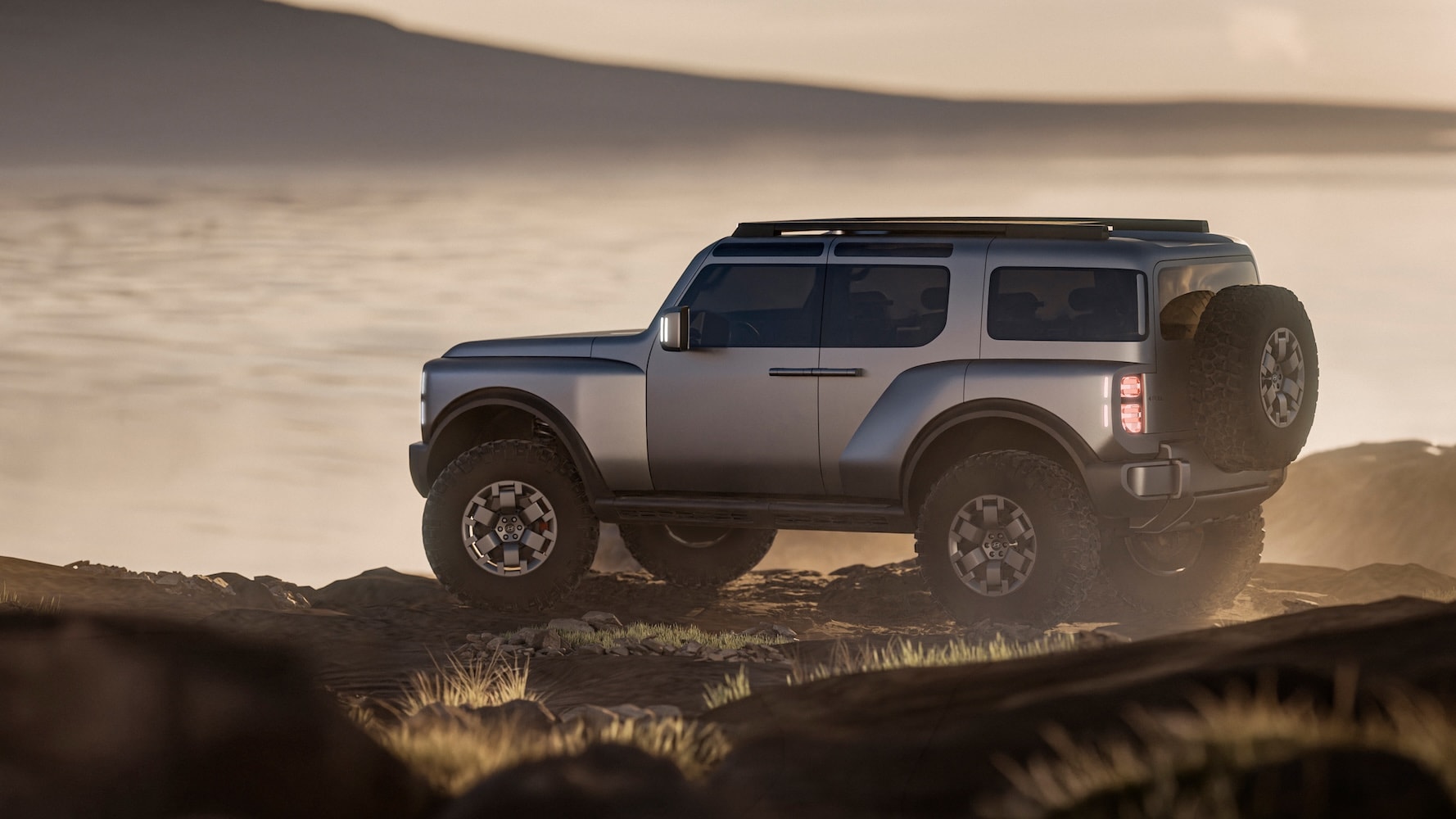
The debut of the Hyundai Boulder Concept at the 2026 New York International Auto Show represents a calculated pivot from mass-market passenger vehicle volume toward the high-margin, high-utility midsize truck segment. By committing to a production body-on-frame midsize pickup by 2030, Hyundai is not merely expanding its portfolio; it is re-engineering its entire North American industrial strategy to challenge the entrenched dominance of the Toyota Tacoma and Ford Ranger. This move signals an end to the unibody experimentation seen in the Santa Cruz, replacing it with a platform capable of meeting the rigorous mechanical demands of American light-duty hauling and off-road technicality.
The Structural Mechanics of the Boulder Platform
The transition to a fully-boxed ladder-frame architecture is the most significant technical shift in Hyundai’s light-vehicle history. Unlike unibody structures, which integrate the chassis and body into a single load-bearing unit, the Boulder’s body-on-frame design isolates the drivetrain and suspension loads onto a rigid steel backbone.
The Torsional Rigidity Function
The performance of a pickup truck in technical off-road scenarios is a function of its frame’s ability to resist twisting while maintaining wheel contact. Hyundai’s "Art of Steel" philosophy utilizes high-strength, American-produced alloys to optimize:
- Vertical Load Bearing: The frame is engineered to handle static and dynamic weight distributions during towing, preventing the body deformation common in light-duty unibody crossovers.
- Point-Load Durability: By concentrating stress on a reinforced frame rather than the exterior skin, the vehicle can support 37-inch mud-terrain tires and aftermarket recovery hardware without compromising structural integrity.
Digital Integration as a Mechanical Force Multiplier
While the hardware remains traditional, the Boulder Concept introduces a software-driven layer designed to bridge the gap between amateur operation and professional off-road technicality. The "Digital Spotter" system serves as a real-time guidance engine, utilizing high-fidelity external sensors to map terrain geometry in a way that physical observers cannot.
The Terrain-Pathfinding Algorithm
This system does not merely provide camera views; it processes environmental data to calculate:
- Dynamic Clearance Ratios: Real-time monitoring of approach, departure, and breakover angles based on active suspension compression.
- Traction Differential Mapping: Analyzing surface friction at each wheel to proactively adjust torque distribution before slip occurs.
The cockpit’s departure from "screen-heavy" design reflects an ergonomic prioritization of tactile feedback. In high-vibration environments, capacitive touchscreens fail as reliable interfaces. Hyundai’s return to physical knobs and switches is a functional requirement for drivers wearing gloves or navigating high-frequency washboard trails.
Supply Chain Sovereignty and the US-Built Mandate
The 2030 production target for the midsize pickup is inextricably linked to Hyundai Motor Group Metaplant America (HMGMA). The industrial logic here is driven by the 25% "Chicken Tax" on light trucks and the intensifying requirements of the Inflation Reduction Act (IRA).
The Cost-Efficiency Matrix of Domestic Production
To compete in the midsize segment, Hyundai must optimize its cost structure across three primary vectors:
- Raw Material Verticality: Utilizing Hyundai-produced American steel removes international logistics volatility and satisfies localized content requirements.
- Proximity to Market: The Southern California-based design team and Georgia-based assembly ensure the product-market fit remains aligned with North American preferences for high-payload capacity and oversized wheel wells.
- Platform Amortization: The Boulder’s body-on-frame architecture will not remain exclusive to a single pickup. The platform is designed for modularity, allowing Hyundai to scale its investment across a range of rugged SUVs to rival the Ford Bronco and Jeep Wrangler.
Competitive Positioning: The Displacement of Legacy Icons
The midsize truck market is currently defined by a legacy-to-tech transition. While the Toyota Tacoma has historically owned the reliability metric, and the Ford Ranger Raptor has captured the high-performance niche, Hyundai is targeting the "Tech-Utility" intersection.
The Feature-Function Correlation
The Boulder Concept’s specific design choices are responses to identified gaps in the current market:
- The Safari Window and Drop-Down Glass: These features address the thermal and visibility limitations of standard truck cabins, targeting the "overlanding" sub-culture that prioritizes 360-degree environmental awareness.
- Double-Hinged Tailgate Dynamics: By allowing the tailgate to swing or drop, Hyundai improves the ergonomics of cargo management, a critical pain point in midsize beds where reach-in access is often restricted.
Strategic Forecast: 2026 to 2030
The four-year window between this concept debut and the 2030 production deadline is a critical period for powertrain finalization. While the concept emphasizes mechanical strength, the production version will likely utilize a multi-energy approach. The architecture is being built to accommodate internal combustion, hybrid, and fully electric powertrains.
This flexibility is essential. A rigid adherence to EV-only would alienate the heavy-towing core of the truck market, while an ICE-only strategy would fail future regulatory compliance. The production model will serve as the anchor for Hyundai’s "North American 36-Model Plan," acting as the high-visibility flagship for the brand’s transition from a value-oriented manufacturer to a technical leader in the most demanding vehicle segment in the world.
The strategic play here is clear: Hyundai is using the Boulder to signal to its competitors that it no longer views the truck market as an elective expansion, but as a mandatory foundation for its next decade of North American growth.