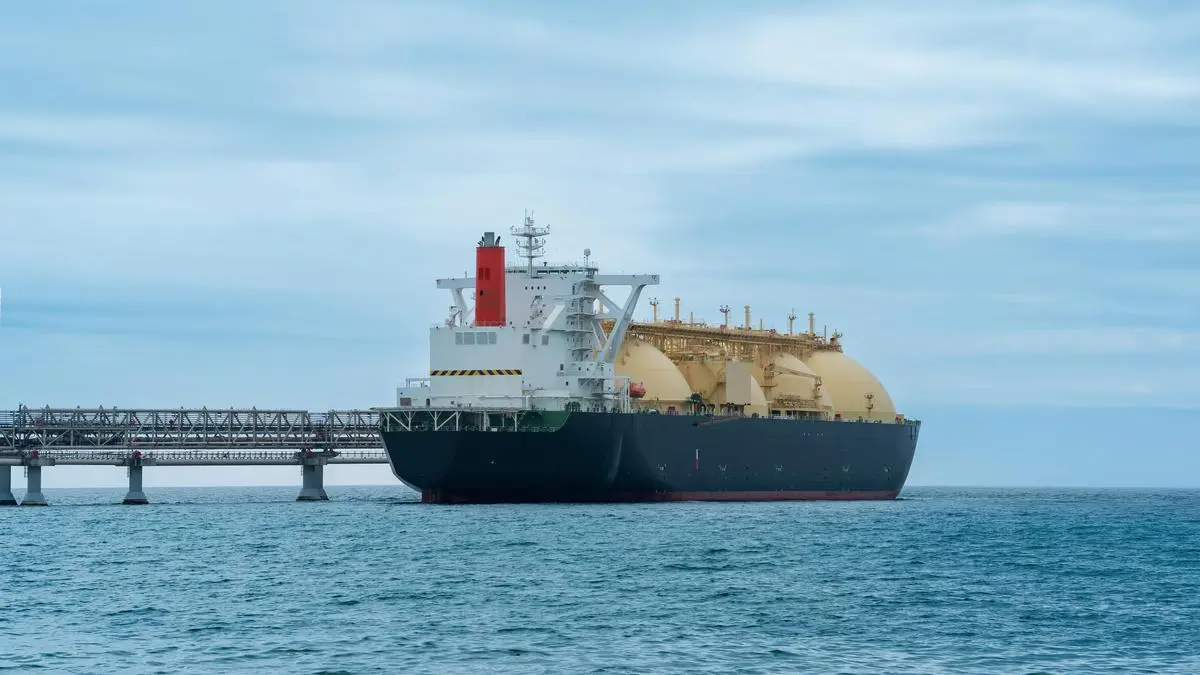
Russia’s pivot to Asian liquefied natural gas (LNG) markets is not a mere search for alternative buyers; it is a forced restructuring of the global energy supply chain driven by the "discount-for-risk" mechanism. As Western sanctions tighten around the Arctic LNG 2 project and the state-owned giant Novatek, the Kremlin is deploying a three-tiered strategy to bypass logistics bottlenecks and financial blacklists. This strategy relies on the predatory pricing of super-chilled gas to entice price-sensitive emerging markets, effectively turning geopolitical pariah status into a competitive cost advantage for energy-hungry economies in South and Southeast Asia.
The Tri-Factor Pressure on Russian LNG Exports
To understand the current market displacement, one must isolate the specific pressures acting upon Russian gas infrastructure. The transition from piped gas to LNG was intended to provide Moscow with "molecular flexibility"—the ability to send gas where it is most valued. However, sanctions have targeted the three critical pillars of this flexibility: Meanwhile, you can read similar events here: Why China's EV Export Surge is a Debt Trap in Disguise.
- Liquefaction Technology: Dependence on Western-built turbines and heat exchangers (specifically from companies like Baker Hughes and Air Liquide) has stalled the completion of subsequent "trains" at the Arctic LNG 2 facility.
- Specialized Logistics: The lack of ARC7 ice-class tankers prevents the year-round traversal of the Northern Sea Route (NSR), forcing a reliance on ship-to-ship (STS) transfers in friendlier waters.
- Financial Clearing: The exclusion of Russian banks from SWIFT and the designation of specific LNG vessels as "blocked property" by the U.S. Office of Foreign Assets Control (OFAC) creates a massive transactional friction.
The intersection of these pressures results in a steep "sanction premium" that Russia must subtract from the Dutch TTF or Japan-Korea Marker (JKM) spot prices to move its inventory.
The Mechanics of the Asian Discount Strategy
Russian LNG is currently trading at a significant delta compared to Henry Hub or Qatari deliveries. This discount is not a fixed percentage but a fluid variable calculated by the buyer’s risk appetite. The pricing model functions as follows: To understand the full picture, we recommend the recent analysis by Investopedia.
Price (Ru) = JKM - (Logistics Premium + Financial Risk Discount + Geopolitical Hedging Cost)
In this equation, the Logistics Premium covers the increased cost of using a "shadow fleet" of aging tankers that lack standard P&I insurance. The Financial Risk Discount compensates the buyer—often state-owned enterprises in India, China, or Vietnam—for the potential "contagion" effect of secondary sanctions.
The Emergence of the "Shadow Fleet" in LNG
While the shadow fleet concept is well-documented in crude oil, its application to LNG is technically more complex. Crude can be stored in standard hulls for long periods; LNG requires constant cryogenic management (boil-off gas control). Russia is currently acquiring older Moss-type tankers that are nearing decommissioning. These vessels operate outside the traditional transparency of the global shipping registry, often disabling AIS (Automatic Identification System) transponders during STS transfers near Murmansk or in the Mediterranean.
Regional Absorption Capacities and Strategic Incentives
The primary sinks for sanctioned Russian LNG are defined by their "energy poverty" levels and their domestic policy on neutrality.
The Indian Calculus: Industrial Feedstock over Geopolitics
India’s massive expansion of its regasification capacity (aiming for 15% gas in its energy mix by 2030) requires cheap molecules to remain competitive in fertilizer production and heavy manufacturing. For New Delhi, Russian LNG represents a hedge against the volatility of the Middle Eastern spot market. The risk of US disapproval is secondary to the risk of domestic industrial stagnation caused by high energy input costs.
The Chinese Buffer: Infrastructure and Strategic Reserves
China acts as both an end-user and a logistical laundromat. By importing Russian LNG into its northern terminals, China frees up Qatari and Australian volumes to be redirected elsewhere, or re-exports "blended" gas. This creates a supply-side buffer that prevents global prices from spiking, even as Western nations attempt to starve Moscow of revenue.
Southeast Asia: The New Frontier of Price Sensitivity
Vietnam and Pakistan represent the "tier three" buyers. These nations face recurring blackouts and lack the foreign exchange reserves to compete for premium-priced cargoes on the open market. To these actors, Russia’s discounted LNG is not a political statement but a fiscal necessity.
The Technological Bottleneck: Ice-Class Scarcity
The most significant constraint on Russia’s Asian pivot is the physical geography of the Arctic. The Northern Sea Route is the shortest path to Asia, but it is impassable for standard tankers during much of the year.
- The ARC7 Deficit: Russia expected 21 ARC7 tankers from South Korean shipyards (DSME/Hanwha Ocean). Sanctions halted these deliveries.
- The Zvezda Failure: Domestic attempts to build these complex vessels at the Zvezda shipyard have been plagued by delays in engine procurement and membrane containment systems.
Without these ships, Russia is forced to use a "hub and spoke" model. Gas is moved via a limited number of ice-class ships to the Port of Murmansk or Kamchatka, where it is transferred to standard tankers. Each transfer point adds a layer of operational cost and physical "shrinkage" (gas loss), further eroding the net-back price for the Russian state.
Secondary Sanctions and the Weaponization of the Dollar
The primary deterrent for Asian buyers is the threat of secondary sanctions. The U.S. Treasury Department has shifted its focus from targeting the source of the gas to targeting the enablers of the trade. This includes:
- Marine Insurers: Traditional P&I clubs are being warned against covering vessels carrying Russian LNG.
- Ship Management Firms: Companies providing crews, maintenance, and technical oversight.
- Terminal Operators: Ports that facilitate the offloading of sanctioned molecules.
The logical counter-move by Russia and its partners is the creation of a "closed-loop" financial system. This involves settling trades in Yuan (RMB) or Rupees and using non-Western insurance providers (such as the Russian National Reinsurance Company). However, these mechanisms lack the depth and liquidity of the dollar-based system, leading to "trapped" currency—as seen with Russia’s accumulation of non-convertible Indian Rupees.
The Long-Term Distortion of Global Gas Benchmarks
The persistence of discounted Russian LNG in the Asian market is creating a bifurcated price environment. We are seeing the emergence of a "Gray Market" benchmark that sits parallel to the official JKM.
This bifurcation has three major consequences:
- Investment Deterrence: Traditional LNG developers in North America and East Africa face higher cost bases than the "discounted" Russian supply, potentially leading to a Final Investment Decision (FID) freeze if they cannot guarantee long-term contracts.
- Contractual Arbitrage: Portfolio players with flexible delivery contracts may choose to take Russian molecules for their Asian commitments while sending their "clean" molecules to Europe to capture the green premium.
- Environmental Degradation: The use of older, less efficient shadow tankers increases the methane slip and carbon intensity per MMBtu of gas delivered, undermining the "gas as a transition fuel" narrative.
Strategic Assessment for Market Participants
The viability of Russia's LNG pivot depends entirely on the speed of Asian infrastructure deployment and the tolerance of the U.S. sanctions regime. If China and India successfully build "sanction-proof" payment and insurance rails, the West’s ability to use energy as a diplomatic lever will permanently diminish.
The immediate strategic play for Asian energy buyers involves:
- Infrastructure Hedging: Building regasification terminals that can handle various ship types, including older Moss-type vessels.
- Sovereign Insurance Pools: Developing state-backed maritime insurance to bypass the London-based P&I clubs.
- Blending Operations: Utilizing floating storage and regasification units (FSRUs) in international waters to mix Russian gas with non-sanctioned supply, effectively "washing" the origin of the molecules.
The global energy market is moving away from a unified global commodity price toward a fragmented, risk-adjusted pricing landscape. The "Asian Discount" is not a temporary glitch; it is the new baseline for an era of fragmented globalization.