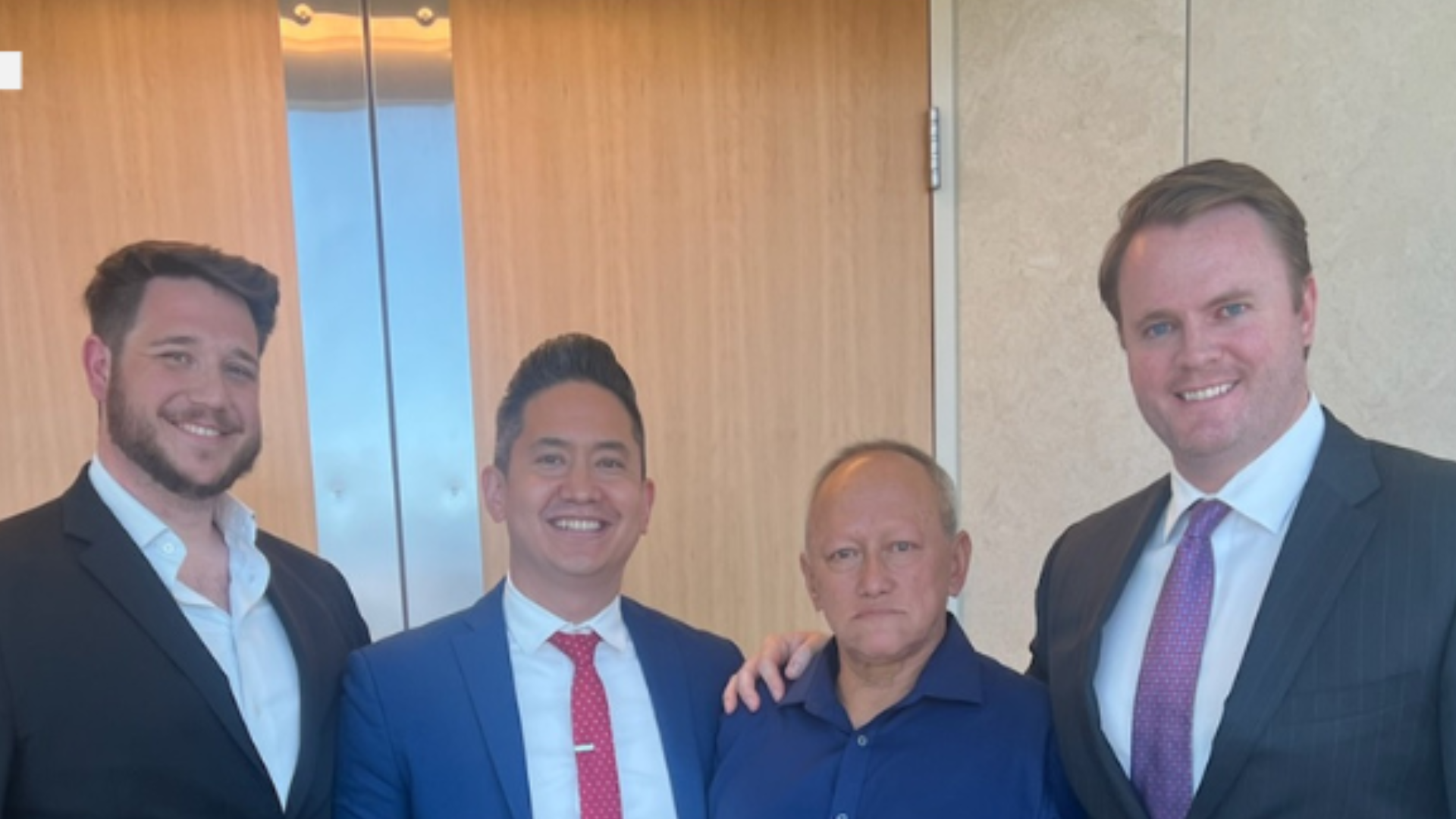
The air in a private equity boardroom doesn't move like the air outside. It is filtered, temperature-controlled, and thick with the scent of expensive upholstery and the unspoken weight of several billion dollars. In these spaces, decorum is a religion. Men in bespoke navy suits speak in hushed tones about EBITDA and leveraged buyouts, their movements calibrated to project an image of absolute, unflinching control.
But control is a fragile mask.
Consider the case of Crispin Odey, a titan of the London hedge fund scene, whose fall from grace didn't happen in a single, explosive moment of market volatility. Instead, it unspooled in the sterile, brightly lit environment of a tribunal room, where the high-flying world of high finance collided with a much older, darker narrative of power and its perceived permissions.
The core of the matter sounds like a fever dream or a dark comedy script. A man of immense influence stands accused of groping a woman. His defense? He wasn't himself. He was under the lingering, hazy influence of a general anaesthetic.
The Fog of the Procedure
Imagine the clinical chill of a hospital recovery room. The beep of a heart monitor. The scratchy texture of a hospital gown. We have all been there, or known someone who has—that state of "coming to" where the world feels made of cotton wool and your own tongue feels like a foreign object. It is a state of profound vulnerability.
Medical science tells us that propofol and its chemical cousins can do strange things to the human psyche. They strip away the filters. They turn internal monologues into external ramblings. But the tribunal wasn't just debating the half-life of a sedative. It was weighing the threshold of accountability.
The hedge fund manager’s legal team argued that the "disinhibiting" effects of the drugs rendered his actions involuntary. It is a plea for empathy rooted in biology. If the brain's "brakes" are cut by a surgeon's needle, is the driver responsible for the crash?
Yet, for the woman at the center of this story, the "why" matters significantly less than the "what." In the narrative of a workplace, an unwanted touch is not a medical side effect. It is a breach of the social contract. It is a reminder that for all the progress we claim to have made, the "glass walls" of Mayfair still protect some people more than others.
The Architecture of Power
To understand why this case resonates far beyond a London courtroom, you have to look at the ecosystem of a hedge fund. These are not typical offices. They are fiefdoms. When a single individual—a "star" manager—is responsible for the wealth of thousands and the salaries of hundreds, they become more than an employee. They become the institution itself.
In such an environment, the lines of consent and professional boundaries don't just blur; they often vanish. When the person accused of misconduct is also the person who signs the checks, the silence that follows isn't an accident. It is a survival strategy.
The "anaesthetic defense" is particularly jarring because it occupies a space of privilege. It suggests that the elite are subject to different laws of physics and morality. It posits that a momentary lapse in chemical balance is a valid shield against the lived reality of a victim.
Think of a hypothetical junior analyst, fresh out of university, walking into a room with a legend of the industry. The power imbalance is already 1,000 to one. If that legend crosses a line, the analyst isn't just fighting a man; she is fighting a monument. She is fighting the legal departments, the PR firms, and the inherent bias that favors the "great man" over the "anonymous complainant."
The Chemical Scapegoat
The medical experts called to the stand dissected the pharmacokinetics of the manager's treatment. They spoke of dosages and durations. It was a clinical autopsy of a moment of misconduct.
"I was not in my right mind," is a powerful story. We use it for everything from crimes of passion to middle-night refrigerator raids. But in the context of professional ethics, it sets a terrifying precedent. If we allow "I was tired," "I was drunk," or "I was medicated" to serve as a total absolution, we dismantle the concept of the "reasonable person" upon which our entire legal system is built.
The tribunal heard that the manager’s behavior was "out of character."
Character is a funny word. We often think of it as a solid block of marble, carved at birth and unchangeable. In reality, character is a series of choices made over a lifetime. It is what we do when we think no one is looking, or when we think we are untouchable. Using a medical procedure as a pivot point for a character assassination—or a character defense—ignores the systemic culture that allowed the behavior to manifest in the first place.
The Invisible Stakes
Why does a story about a groping allegation in a niche financial district matter to a schoolteacher in Ohio or a developer in Berlin?
Because it represents the "High-Value Man" loophole.
Across every industry—tech, film, sports, and finance—we see a recurring pattern. When a high-performer is accused of something reprehensible, the first instinct of the organization is to calculate the cost of losing them versus the cost of the scandal. This is the cold math of the modern world.
If the "star" brings in $500 million in annual returns, a "misunderstanding" is often treated as a rounding error. The "human element" becomes a liability to be managed, rather than a person to be protected. The tribunal wasn't just investigating a single incident; it was putting a price tag on integrity.
The testimony revealed a world where "flirtatious" behavior was seen as a perk of the job, and where discomfort was something to be "managed away" by HR. It painted a picture of a workplace that was technologically in the 21st century but socially in the 19th.
The Anatomy of a Defense
The defense strategy was brilliant in its simplicity: turn the perpetrator into a patient.
By framing the manager as a victim of his own biology, they attempted to shift the focus from the act to the impulse. They wanted the tribunal to look at brain chemistry instead of the woman’s face. It was an attempt to dehumanize the event by over-medicalizing it.
But the testimony of the woman involved brought the narrative back to earth. She spoke of the shock. The freezing sensation. The immediate, visceral understanding that her space had been violated by someone who felt entitled to it. That feeling doesn't care about the half-life of a sedative. It doesn't care about the "disinhibiting" qualities of a drug. It only knows that the world feels less safe than it did five minutes ago.
The real problem lies elsewhere, far from the vials of anaesthetic. It lies in the fact that we are still surprised when these stories come to light. We treat them as anomalies, as "once-in-a-career" lapses, rather than the predictable outcome of a culture that rewards aggression and ignores boundaries as long as the numbers stay green.
The Ripple Effect
When the news broke, the financial world didn't just gasp; it recalculated.
Banks began severing ties. Investors started pulling funds. Not necessarily because they were suddenly struck by a bolt of moral lightning, but because the "star" was no longer a safe bet. The brand had become toxic. This is the only language the Mayfair ecosystem truly understands: the language of the exit.
Consider what happens next: the industry will likely issue statements about "zero tolerance" and "refreshed compliance training." There will be webinars and handbooks. But until the underlying power structure changes—until the person with the most money is held to the same standard as the person with the least—these procedures are just window dressing.
The anaesthetic defense might have been a legal tactic, but in the court of public opinion, it felt like a desperate gasp from a dying era. It was an admission that "I couldn't help myself" is the last refuge of a man who has never been told "no."
Beyond the Verdict
The tribunal eventually had to make a choice. They had to decide if a medical fog could truly erase a person's moral compass. But regardless of the legal outcome, the damage to the "great man" myth is permanent.
We are moving into an era where "out of character" is no longer a get-out-of-jail-free card. We are beginning to understand that the "character" of an institution is defined by what it tolerates, not what it puts in its mission statement.
The woman who spoke up didn't just challenge a hedge fund manager. She challenged the idea that some people are too important to be decent. She stood in that boardroom air—that still, filtered, expensive air—and forced everyone to breathe the truth.
The image that lingers isn't the manager in his hospital gown or the millions of dollars in managed assets. It is the quiet, steady courage of someone refusing to be a footnote in someone else's medical excuse. It is the realization that no matter how much anaesthetic you take, the world eventually wakes up.
And when it does, the truth is usually sitting right there at the foot of the bed, waiting for an explanation.