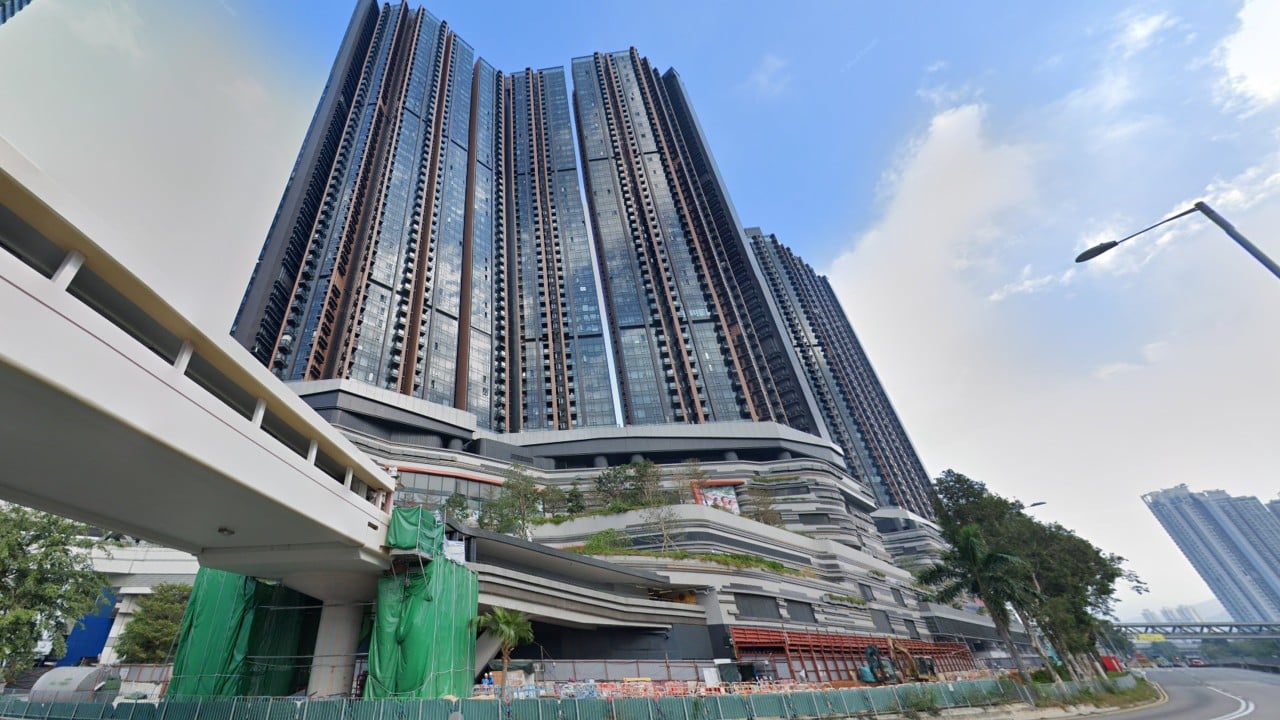
The air in the sales office of a new Kai Tak development doesn't smell like ocean breeze or luxury perfume. It smells like desperation and laser toner. It is the scent of a thousand credit checks being run simultaneously.
For the last eighteen months, the silence in Hong Kong’s property showrooms was heavy enough to swallow you whole. You could walk into a high-end gallery in Wong Chuk Hang and hear your own heartbeat. But something shifted last week. The silence broke. It was replaced by the frantic clicking of pens and the low, urgent murmur of young couples calculating their debt-to-income ratios on the back of glossy brochures.
Developers are not subtle creatures. They sense a change in the wind before the weather bureau does. Sensing a pulse in a market that many had left for dead, they have just green-lit a massive surge of inventory. Specifically, 1,300 new homes are hitting the pavement all at once.
The Mathematics of Hope
Consider a hypothetical buyer named Marcus. Marcus is thirty-two, an analyst at a mid-tier firm, and he has spent the last three years watching the property market like a hawk watches a wounded rabbit. He is the "firmer demand" the headlines talk about. But Marcus isn't a statistic. He is a man who is tired of living in a subdivided flat where he can touch both walls if he stretches his arms.
For Marcus, the news that prices have edged up by 1% or 2% isn't a dry economic indicator. It is a starter pistol. In Hong Kong, a slight rise in price doesn't always deter buyers; often, it panics them. It signals that the bottom—that mythical, shimmering floor we’ve all been waiting for—might finally be behind us.
The developers know this. They have watched the inventory pile up like snowdrifts. They held back during the high-interest-rate droughts of 2023 and 2024. Now, with the Federal Reserve finally signaling a retreat on rates and the local banks following suit, the floodgates have been kicked open.
The 1,300 units aren't just floor plans. They are a gamble that the collective psyche of the city has pivoted from "wait and see" to "buy before it’s too late."
The Shadow of the Inventory
Walking through a show flat is a masterclass in psychological warfare. The mirrors are placed to make a 300-square-foot studio look like a ballroom. The furniture is scaled down to 80% of its normal size so the rooms feel spacious. But you can't shrink the mortgage.
The sheer volume of this rollout—the "Great 1,300"—is a defensive play disguised as an offensive one. Major players like Sun Hung Kai and New World Development are staring at a mountain of unsold units. The secondary market is currently a graveyard of "low-floor, no-view" apartments that nobody wants. To move their new stock, developers have to be aggressive.
They aren't just selling four walls and a balcony. They are selling financing schemes that look like magic tricks. They offer "breather periods" where you pay only interest for the first two years. They offer stamp duty rebates that feel like a gift but are actually just a way to keep the "official" price of the unit high while the actual cash flow is lower.
It is a delicate dance. If they drop the prices too fast, they kill the confidence of the people who bought last month. If they keep them too high, the 1,300 units will sit empty, gathering dust and interest expenses.
The View from the 50th Floor
There is a specific kind of vertigo that comes with looking at a construction site in Kai Tak. You see the skeletons of twenty different towers rising out of the dirt. Each one represents billions of dollars in borrowed capital.
The "firmer demand" cited by analysts is a fragile thing. It is built on the assumption that the worst of the economic winter is over. We see the numbers: a slight uptick in the Centa-City Leading Index, a few weekend sell-outs at projects like Blue Coast or The Seasons. But look closer at the faces in the queue.
They aren't the speculators of 2017. There are no "moms and pops" buying five units at a time with cash. These are end-users. These are people like Marcus who are terrified that if they don't lock in a price now, the window will slam shut on their fingers.
The human element of a price hike is often counter-intuitive. In most markets, when the price of bread goes up, people buy less bread. In Hong Kong real estate, when the price goes up, people line up overnight in the rain to buy the bread because they fear tomorrow’s loaf will be made of gold.
The Invisible Stakes
Why does a 1% price increase trigger a 1,300-unit dump? Because the window of opportunity in global finance is currently the size of a mail slot.
The developers are racing against time. They know that the geopolitical situation is a tinderbox. They know that the local economy is still finding its feet after a long, bruised hibernation. They need to liquefy their assets now.
Every unit sold is a weight off a corporate balance sheet. For the buyer, however, every unit sold is a thirty-year weight placed squarely on their shoulders.
The "firmer demand" is actually a redistribution of risk. The risk is moving from the massive, diversified portfolios of billionaire developers into the bank accounts of the middle class. When the headlines say "demand is stabilizing," what they mean is that the public’s appetite for risk has finally returned to match the developers' need for cash.
The Sound of the Gavel
If you visit a sales hall this weekend, listen. You will hear the rhythmic calling out of unit numbers. Flat B, 22nd Floor, Sold. Flat G, 15th Floor, Sold. It sounds like progress. It looks like a recovery. But beneath the polished marble floors of the sales offices, the reality is more complex. The 1,300 homes represent a massive test of the city's resolve. If these units move quickly, it confirms the narrative of a rebound. If they linger, the "firmer demand" will be revealed as a mirage, a brief flickering of hope before the long shadow of oversupply returns.
Marcus stands at the back of the room. He holds a number in his hand. He looks at the model of the tower, a gleaming plastic needle reaching for a miniature sky. He isn't thinking about interest rate cycles or inventory absorption rates. He is thinking about whether he will finally be able to buy a dining table that fits four people.
He is the reason the 1,300 units exist. He is the one who will decide if the "edge up" in prices is a permanent stairs-climb or just a stumble on the way down.
The pen is in his hand. The contract is open. The developer's agent is smiling, a bright, practiced expression that doesn't reach the eyes. The air is still thick with the scent of toner and sweat.
Marcus signs. He has to believe the floor is solid. Because in this city, the only thing more expensive than buying a home is the cost of waiting for the perfect time to do it.
The lights in the showroom will stay on late tonight. There are 1,299 keys left to find a home.
Outside, the sun sets over the harbor, casting long, jagged shadows of new towers across the water, reaching toward a future that is being bought and sold one signature at a time.